

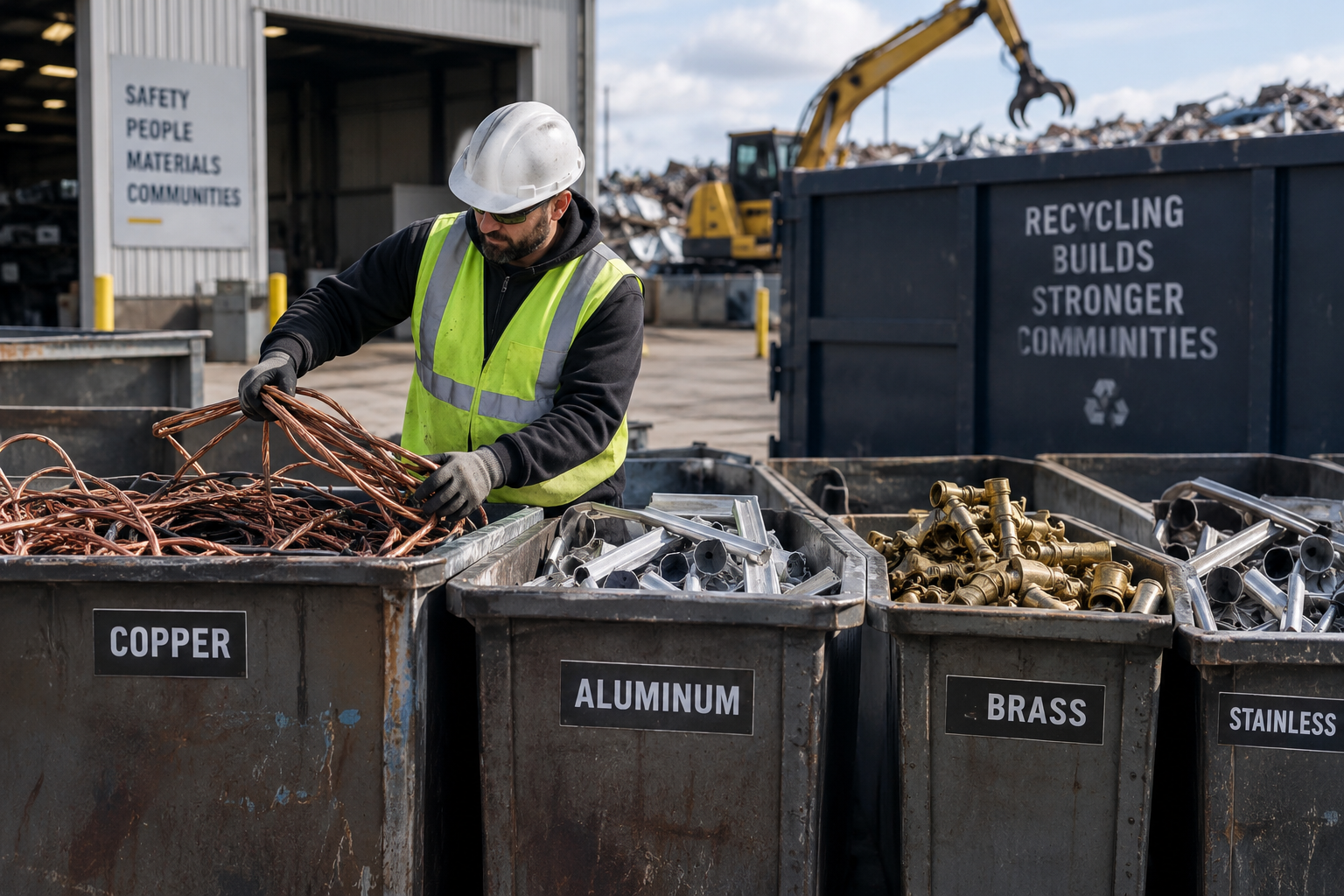
Mixed metal loads are common at manufacturing plants, warehouses, maintenance operations, construction sites, and other commercial facilities. Steel may be mixed with aluminum, stainless steel, copper wire, brass fittings, motors, or equipment removed during a cleanout. How those materials are handled before they reach the scrap yard can affect what the load is worth.
To get the most value from mixed metal loads, businesses should focus on a few things that make a practical difference: separating higher-value metals when possible, keeping obvious contamination out of the load, and accumulating enough material to make handling and transportation efficient.
The point is not to sort every nut and bolt. It is to avoid losing value by mixing materials that can easily be kept separate.
What Determines Mixed Scrap Metal Pricing?
Mixed scrap metal pricing depends first on what is actually in the load. Steel, aluminum, stainless steel, copper, brass, insulated wire, motors, and other scrap materials have different values and processing requirements.
When several grades arrive mixed together, they have to be identified and sorted. A load that is mostly steel, for example, may also contain smaller quantities of copper, brass, or aluminum. If those higher-value metals are easy to identify before loading, keeping them separate may result in better recovery than putting everything into the same container.
This comes up often during equipment replacements and facility cleanouts. Steel frames and machine parts may make up most of the volume, while electrical work produces copper wire and maintenance work produces brass or stainless components. Those materials do not need to follow the same scrap path simply because they came out of the facility at the same time.
For a review of common scrap categories and basic grading considerations, see our Scrapping 101 overview.
How to Get the Most Value from Mixed Metal Loads
Maximizing value of mixed metal usually comes down to selective separation. Spend preparation time on materials where separation is likely to matter, rather than adding labor to every piece of scrap.
Separate Higher-Value Metals Before They Reach the Main Container
Copper, brass, aluminum, stainless steel, and certain types of wire should not automatically go into a container filled primarily with steel or general mixed metal.
Facilities that generate these materials regularly can designate separate drums, bins, gaylords, or other appropriate containers. The setup does not have to be complicated. A maintenance department that generates brass fittings periodically may only need one labeled bin. A manufacturer producing larger quantities of aluminum or stainless scrap may need dedicated containers as part of its regular material-handling process.
A magnet is also useful for basic identification. Steel and iron are generally magnetic, while common nonferrous metals such as copper, brass, and aluminum are not. It will not identify every metal grade, but it can help employees make an initial separation.
For additional mixed load scrap tips, see our guide to cleaning and separating scrap metal for maximum value.
Keep Obvious Contamination Out of the Scrap
Cleaning scrap does not mean polishing it or removing every trace of another material. For commercial generators, the question is whether a reasonable amount of preparation will improve the quality or grade of the scrap.
Wood, plastic, rubber, trash, excessive dirt, liquids, and other non-metal material can add weight and handling without adding scrap value. Where these materials can be removed safely and quickly, doing so before loading makes sense.
Some equipment requires more care. Items containing fluids, refrigerants, batteries, or other regulated materials may have specific handling requirements. These should be identified before employees begin dismantling equipment or placing it into a scrap container.
Labor matters, too. Taking a few minutes to separate an accessible brass fitting from a steel assembly may be worthwhile. Assigning an employee several hours to dismantle a complex machine for a small quantity of recoverable metal may not be.
When the answer is not obvious, ask your recycling facility how the material will be graded before putting significant labor into preparation.
Prepare Mixed Scrap Metal Where It Is Generated
Facilities often create unnecessary work by putting all scrap into one container and trying to sort it later.
It is easier to sort mixed scrap metal as it is generated rather than after it has all been collected. For example, when a maintenance crew replaces equipment, steel can go into the main scrap container while copper wire, brass fittings, and aluminum parts are placed in separate containers.
Manufacturing operations can do the same with recurring production scrap. Contractors and facility teams handling renovation work can establish collection areas before demolition starts rather than trying to pull higher-value material out of a full container afterward.
This avoids double handling. Once several tons of material have been mixed together, separating it takes more time and space than putting it in the right container the first time.
Our facility checklist for preparing scrap metal covers additional steps facilities can use when setting up a repeatable scrap process.
Larger Loads Can Reduce Unnecessary Handling
Load size is another factor commercial generators should consider.
Shipping every small quantity as soon as it accumulates can mean more pickups, more employee time, and more handling. Where storage space and operating conditions allow, consolidating material into larger loads can make the process more efficient.
This does not mean holding material indefinitely in an attempt to time scrap markets. Prices change, and short-term movements are difficult to predict. A more useful approach is to establish a pickup or delivery threshold based on the amount of scrap the facility generates, available storage space, container capacity, and transportation requirements.
A manufacturer generating metal every week might use a dedicated container and schedule service when it reaches an agreed level. A warehouse completing a one-time cleanout might stage material until there is enough for one larger, organized load rather than making several small trips.
For facilities producing ongoing volumes, our recycling services include commercial collection, material pickup, containers, equipment options, and related services.
Example: Preparing a Mixed Facility Cleanout
Consider a Massachusetts warehouse removing old pallet racking, guardrails, electrical components, and maintenance equipment.
Most of the volume may be steel. Putting the steel racking and guardrails into the main scrap container is straightforward. But if the same project produces copper cable, brass valves, aluminum parts, or stainless components, those materials can be placed in separate bins as they are removed.
There is little reason for employees to sort individual steel fasteners. A box of copper cable, however, should be kept out of a container holding several tons of steel when separate handling is practical.
Before the load leaves the property, the facility can also remove loose trash and other obvious non-metal material. If space allows, it can accumulate enough scrap to make the pickup or delivery worthwhile.
That level of preparation is generally more useful than trying to dismantle and sort every piece down to its individual components.
FAQ: How Can I Get the Most Value From My Load?
To get the most value from mixed metal loads, start with the materials that are easy to identify and worth keeping separate. Keep copper, brass, aluminum, stainless steel, and other higher-value metals out of bulk steel loads when the quantities justify separate handling. Remove obvious contamination, and build larger loads when storage capacity and operations allow.
For most commercial generators, the useful mixed load scrap tips are straightforward:
- Separate identifiable higher-value metals before they enter the main scrap container.
- Remove obvious non-metal material when it can be done safely without excessive labor.
- Sort recurring scrap streams at the point of generation.
- Label containers so employees know where material belongs.
- Consolidate loads when space, safety, and operating requirements allow.
- Check with us before spending substantial labor cleaning or dismantling unfamiliar material.
The best preparation method depends on the material and the quantities involved. A facility generating a few pounds of a particular metal has different handling needs than a manufacturer producing hundreds or thousands of pounds on a regular schedule.
Build a Better Process for Your Next Mixed Load
Getting more from a mixed load does not require sorting every piece. It requires keeping valuable material from being unnecessarily mixed, controlling contamination, and choosing a load size that makes sense for the facility.
We work with Massachusetts commercial generators to evaluate scrap, determine which materials are worth separating, and set up practical collection and handling methods. For facilities with ongoing scrap volumes, we can also review container needs and pickup schedules so material does not have to be handled more than necessary.
If you have a mixed metal load ready to move or want to improve how your facility prepares recurring scrap, contact us. Let us know the types of metal you have, the approximate volume, and whether the material is generated regularly or comes from a one-time cleanout. That information will help us determine the most practical way to handle the load.