

A Misstep That Costs Real Money
Even when materials are sorted correctly upstream, too many Massachusetts facilities are losing revenue at the baler. The problem? Contaminants that slip through unnoticed, degrade the value of entire loads, or lead to rejected bales. Commercial recycling contamination isn’t just a quality control issue—it’s a hidden cost driver. If your bales contain items that don’t belong, you’re likely paying more in disposal fees and leaving revenue on the table.
We’re breaking down the most common contamination errors we see in baled recyclables and offering practical steps to correct them.
When Good Material Goes Bad: The Contamination Risks Facilities Overlook
Moisture: The Invisible Bale Killer
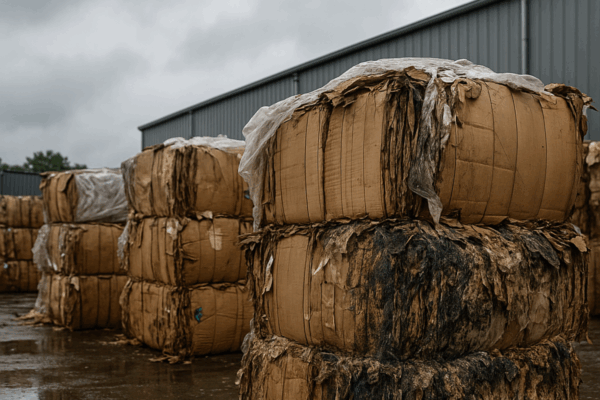
It doesn’t take much rain, humidity, or snowmelt to degrade the quality of a bale. Wet OCC and mixed paper lose integrity, develop mold, and become a disposal liability instead of a revenue asset. Facilities often underestimate how quickly this happens, especially when bales are stored on outdoor pads or loaded into damp trailers.
Plastic Wrap and Bagging Materials
Stretch wrap, pallet film, and plastic bags are consistent contaminants in both fiber and rigid plastic bales. They snag on screens and conveyors, jam equipment, and introduce soft plastics into streams that require rigid-only content. Despite being recyclable in some settings, they don’t belong in standard commercial bale mixes and create costly downtime.
Residual Food and Grease
Unwashed containers and greasy paper items create both aesthetic and operational issues. Even trace amounts of organic material can attract pests, compromise baler cleanliness, and cause entire shipments to be flagged by mills or processors. This is especially common in mixed commercial loads from break rooms or tenant spaces.
The Wrong Plastics in the Right Bale
Not all plastics are compatible. Including black plastics, films, or mixed polymers in a bale designed for #1 or #2 plastics can downgrade or invalidate the load. Optical sorters can’t always catch these differences, making it vital that sorters and loaders are trained on polymer types and visual IDs.
Building Better Bale Practices
Step 1: Define and Communicate a No-Tolerance List
Facilities that succeed in minimizing commercial recycling contamination have one thing in common: a clear, published list of prohibited materials. This isn’t just signage at a dock door—it’s a formalized part of onboarding, contractor expectations, and vendor communications. Reinforce with photos, real bale samples, and updates when contamination rules shift.
Step 2: Audit What You’re Actually Baling
You can’t fix what you don’t measure. Open random bales at regular intervals and document what’s inside. Are there plastic films in your cardboard? Are metal lids or caps mixed in with plastics? Bale audits help pinpoint where in your facility the errors originate—whether it’s janitorial staff, a specific tenant, or a flawed sort line setup.
Step 3: Address the Weakest Link in Your Flow
Once contamination sources are identified, fix them at the source. That might mean changing container types in break rooms, tightening vendor requirements, or revising shift-level QC checks. One Massachusetts facility we worked with reduced their contamination rate by 30% just by separating incoming materials from tenants before loading them into the main sort line.
Step 4: Protect the Bale Before It Ships
Contamination doesn’t end at sorting. We often find bales downgraded due to exposure—stored on wet ground, wrapped in damaged film, or shipped in dirty trailers. Train your dock staff to treat baled material as finished product. A clean, dry, properly staged bale is more likely to be accepted at full value.
The Cost of Doing Nothing
Failing to address commercial recycling contamination results in real operational consequences:
- Loads may be rejected by end markets, forcing disposal and transport costs.
- Bale values decline, cutting into recycling revenue.
- Staff spend time clearing jams and cleaning equipment clogged with wrong materials.
- Repeat violations can lead to fines, especially under municipal or MRF agreements.
Avoiding these costs starts with operational clarity, staff alignment, and real-time accountability.
Your Next Step
Reducing commercial recycling contamination is a facility-level improvement that pays for itself. We help manufacturers, warehouses, and institutional facilities in Massachusetts identify the hidden contamination in their process and implement fixes that stick. Contact us today to schedule a bale assessment or contamination audit.