

The Operational Challenge
Stretch wrap and plastic film move through warehouses and manufacturing plants every shift. They arrive on inbound pallets, secure outbound loads, and accumulate quickly on the dock. When LDPE film is treated as trash, it drives up disposal costs, clogs compactor capacity, and creates avoidable inefficiencies—especially in high-volume Massachusetts facilities.
This LDPE plastic film recycling guide is written for warehouse managers, operations leads, and sustainability teams who need a clear, workable approach to handling plastic film at scale. The focus is on how LDPE film recycling actually functions inside an operating facility, not general recycling theory.
What LDPE Plastic Film Is and Why Facilities Generate So Much of It
LDPE plastic film is low-density polyethylene packaging used primarily for pallet stretch wrap, shrink wrap, poly bags, and protective overwrap in industrial and commercial facilities.
In most distribution centers and manufacturing plants, LDPE film is one of the largest recyclable streams by volume. It is also one of the most frequently mishandled.
From a recycling standpoint, LDPE film has value only when it is clean, sorted, and consolidated. From an operational standpoint, unmanaged film quickly becomes a space problem. Loose wrap expands, migrates across work areas, and fills dumpsters long before weight limits are reached.
Why LDPE Film Recycling Requires a Different Approach
LDPE film does not behave like rigid plastics or cardboard. It is light, flexible, and bulky. Facilities that attempt to recycle film without adjusting their material handling process often see programs stall.
Effective LDPE film recycling depends on three controls:
- Collection at the point of generation
- Strict contamination prevention
- Volume consolidation through baling
Without these controls, film recycling becomes inconsistent and difficult to sustain.
LDPE Plastic Film Recycling Guide: Facility-Level Process
Step 1: Capture Film Where It Is Generated
Successful programs collect stretch wrap at receiving doors, pallet breakdown areas, and production lines. Employees should not have to walk film across the building or decide later where it belongs.
Clearly marked film-only containers placed at the source reduce contamination and labor time. This is especially important in fast-paced warehouse environments where material handling speed affects throughput.
Step 2: Prevent Contamination Before It Starts
LDPE film must be clean and dry. Contamination is the most common reason recycling loads are downgraded or rejected.
Typical problem materials include:
- Paper labels and slip sheets
- Plastic or steel strapping
- Cardboard fragments
- Food residue or moisture
A simple operating rule works consistently: if the material did not come directly off a pallet as plastic film, it does not belong in the film stream.
Baling LDPE Film for Recycling
Why Baling Is Required
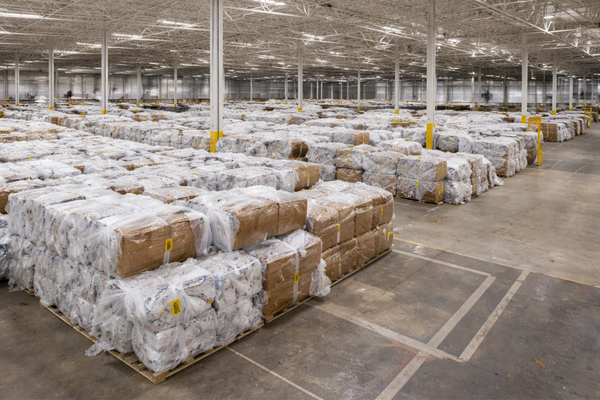
Loose LDPE film has very low density. Without proper baling, transportation costs quickly exceed material value.
Most facilities use:
- Vertical balers for moderate film volumes
- Horizontal or two-ram balers for high-throughput operations
Consistent bale quality is critical. Under-tied or misshapen bales create handling issues and increase the risk of rejected loads.
Bale Quality Controls That Matter
- Keep film types consistent
- Minimize color mixing where possible
- Tie bales tightly and evenly
- Store bales indoors to prevent moisture exposure
These controls protect material value and reduce downstream issues.
Storage and Dock Management Considerations
Baled plastic film should be staged in a dedicated recycling area, separate from cardboard and trash. Floor markings, signage, and standard work instructions reduce cross-contamination and improve safety.
For Massachusetts facilities, indoor storage is especially important. Rain and snow exposure introduce moisture that can downgrade bale quality and reduce market acceptance.
Plastic Wrap Recycling for Businesses in Massachusetts
Effective plastic film recycling for businesses depends on access to consistent regional markets. Specifications, transportation logistics, and outlet reliability all affect program performance.
A local commercial recycler provides:
- Clear material acceptance standards
- Pickup schedules aligned with warehouse throughput
- Stable end-market access for baled LDPE film
We support LDPE recycling programs designed for warehouses, manufacturers, and distribution hubs. Learn more about managing and recycling LDPE film.
Pallet Wrap Recycling and Compliance Benefits
Recycling pallet wrap is not only a cost decision. It supports waste diversion reporting, customer sustainability requirements, and internal performance metrics.
For multi-site operators, standardized warehouse plastic film recycling programs improve consistency across locations, simplify training, and reduce operational variability.
Common Questions About LDPE Film Recycling
Can all stretch wrap be recycled?
Most clear LDPE stretch wrap is recyclable if it is clean and free of contamination. Specialty or layered films should be reviewed before inclusion.
Is a baler required?
Yes. Baling is necessary to transport LDPE film economically and meet recycling market requirements.
How much film volume justifies recycling?
Facilities generating multiple gaylords or dumpsters of loose film per week typically benefit from a dedicated recycling program.
Getting an LDPE Film Recycling Program in Place
Every facility’s waste stream is different. Layout, staffing levels, film generation points, baler access, and available dock space all affect how a program should be designed.
We work with warehouses and manufacturers to evaluate film volume, equipment capacity, storage constraints, and labor flow, then implement recycling programs that align with daily operations. For more details, visit our plastics recycling page.
Next Steps
If your facility is generating multiple dumpsters of stretch wrap per week, experiencing frequent compactor overflows, or receiving rejected recycling loads due to contamination, we can help identify the breakdown points. A well-run LDPE program reduces disposal costs, improves compliance, and keeps high-volume plastic film under control. Contact us to review your current setup and determine the right path forward.