

Why Off-Spec Material Segregation Matters in Manufacturing
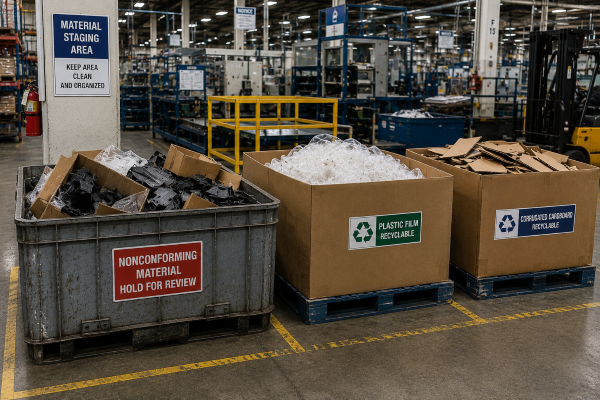
Off-spec material segregation prevents rejected or nonconforming materials from being mixed with standard waste and recycling streams. It relies on clear containers, labeling procedures, and ownership responsibilities to keep materials controlled from the point of rejection through final disposition.
Proper segregation matters because off-spec materials are not simply waste. They may require review, approval, recycling, destruction, or another specific handling process before leaving the facility. The greatest risk often occurs after a material is rejected, when it moves between the production floor, warehouse, staging area, or loading dock without a defined process.
When ownership and procedures are unclear, materials can be misplaced, mixed with the wrong stream, or lose traceability. For manufacturers managing multiple material streams, effective segregation helps protect quality requirements, prevent improper handling, and maintain control over where materials go next.
What Is Off-Spec Material Segregation?
Off-spec material segregation is the process of separating rejected, damaged, or nonconforming production materials from standard waste and recycling streams.
Off-spec material differs from routine scrap because it may require review, approval, testing, or a separate disposition decision before it can enter a recycling or disposal stream. Examples include products that fail inspection, materials removed during production changeovers, damaged packaging, or components placed on quality hold.
A successful segregation process defines:
- What qualifies as off-spec material
- Where the material should be placed
- How the material should be labeled
- Who is responsible for review and movement
The purpose is to maintain control over the material until the proper next step has been determined.
Facilities managing multiple recyclable streams should also evaluate their overall recycling services program to ensure collection methods, equipment, and downstream processing requirements align.
Why Industrial Waste Segregation Problems Start at the Source
Industrial waste segregation problems usually begin during normal facility operations, not after materials leave the building.
Production employees, warehouse teams, and supervisors make frequent material handling decisions throughout each shift. When those decisions rely on individual judgment instead of a standard procedure, waste streams become inconsistent.
Common causes of segregation errors include:
- Containers that look similar but serve different purposes
- Labels that are unclear, damaged, or outdated
- Quality hold areas without assigned ownership
- Temporary staging locations that become permanent
- Different departments following different procedures
These issues are common in facilities managing plastics, packaging, metals, and production scrap.
Improving off-spec material segregation starts by identifying where control can be lost. The production floor, warehouse, staging area, and loading dock are the points where clear procedures, ownership, and physical separation determine whether materials remain properly managed.
3 Steps to Improve Waste Sorting with Off-Spect Material Segregation
-
Create a Defined Procedure at the Point of Rejection
The best time to manage off-spec material is when it is first identified.
A quality hold tag, rejected material label, or designated staging area helps employees recognize that a material requires different handling. The procedure should define what happens immediately after rejection, including where the material goes and who reviews it.
For example, if a production line creates components that fail inspection, those materials should move directly into a designated review or quarantine area. Leaving them beside general production scrap creates confusion and increases the chance of incorrect handling.
Clear procedures reduce mistakes because employees are not forced to make a new decision each time a material issue occurs.
-
Keep Materials Separated Before They Reach the Loading Dock
The loading dock is a transition point, not a sorting area.
By the time materials reach the dock, employees may no longer know whether containers contain approved recyclables, production scrap, or rejected materials awaiting review. Once streams are mixed, recovery becomes more difficult.
Facilities improve secure waste streams by separating materials earlier in the workflow. Production areas, warehouses, and staging locations should have clearly identified collection points for each material category.
For facilities managing high volumes of recyclable materials, recycling equipment options can help reduce loose material handling, improve storage efficiency, and create more consistent recycling streams.
-
Assign Ownership for Nonconforming Material Handling
Nonconforming material handling requires coordination between quality, production, warehouse, and operations teams.
Quality teams may identify the issue. Production teams may generate the material. Operations teams may move it through the facility. Without clear ownership, materials can remain in staging areas, lose identification, or be moved incorrectly during cleanup activities.
A defined process should identify:
- Who labels rejected materials
- Who approves movement from production
- Who verifies the correct waste or recycling stream
- Who audits staging areas
- Who manages final disposition
Clear responsibility prevents materials from becoming unassigned once they leave the production line.
How Can Manufacturers Improve Production Waste Management?
Production waste management improves when facilities treat material handling as part of the manufacturing workflow rather than a separate disposal task.
A practical review should include:
- Mapping where rejected materials are generated.
- Reviewing how materials move through the facility.
- Identifying where sorting decisions occur.
- Standardizing labels and container locations.
- Training employees and supervisors.
- Reviewing contamination issues and adjusting procedures.
For many facilities, the biggest improvements come from small operational changes: moving containers closer to the point of generation, improving signage, adding ownership checks, or including material reviews during shift handoffs.
Example: Improving Material Control During Production Changeovers
A manufacturing facility was experiencing repeated issues with rejected materials entering general waste containers during production changeovers. Employees understood that the material could not return to production, but there was no consistent process for separating it from other waste.
The facility created a dedicated off-spec staging area, added standardized labels, and assigned responsibility between quality and production teams. Supervisors included material checks during routine floor walkthroughs and shift handoffs.
The result was fewer sorting errors, improved material tracking, and better visibility into where rejected materials were moving throughout the facility.
Frequently Asked Questions About Off-Spec Material Segregation
What materials require off-spec segregation?
Materials that fail quality requirements, do not meet production specifications, or require review before disposal or recycling should be separated from standard waste streams. The exact requirements depend on facility procedures, customer requirements, and material characteristics.
Who should manage off-spec material handling?
Off-spec material handling should involve the departments closest to the material flow, including quality, production, warehouse, and operations teams. One person or department should be responsible for verifying that procedures are followed.
How often should segregation procedures be reviewed?
Facilities should review segregation procedures whenever materials, equipment, production processes, or waste streams change. Regular floor audits can identify where employees need updated instructions or improved resources.
Maintaining Secure Waste Streams Through Better Material Handling
Secure waste streams depend on keeping materials identified, separated, and properly managed from the point of rejection through final disposition. When off-spec materials are handled consistently, facilities can improve material accountability, reduce sorting errors, and maintain better control over their recycling and waste streams.
We work with Massachusetts manufacturers, warehouses, and commercial facilities to improve material handling processes and develop recycling programs that fit their operational needs. Contact us to review your current approach, identify separation challenges, and discuss solutions that support your facility’s workflow.