

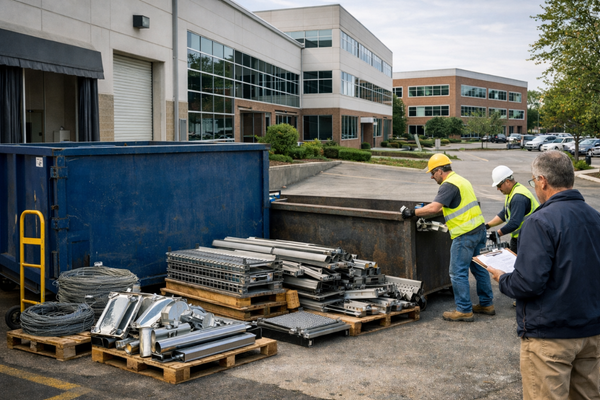
At most business parks and multi-tenant properties, scrap metal does not build up in one neat stream. It comes from tenant move-outs, maintenance work, fixture replacements, warehouse cleanouts, office renovations, and routine operations. That is why property managers usually get better results when scrap metal recycling is managed as an ongoing site function rather than an occasional pickup request.
In Massachusetts, there is also a compliance reason to keep the program organized. RecyclingWorks Massachusetts notes that property managers, tenants, haulers, and disposal facilities all share responsibility for complying with state waste ban requirements, and that tenant communication and contamination problems often cause recyclable material to end up in the trash. For multi-tenant properties, the operating priority is clear: keep scrap metal separated, keep containers usable, and make the rules clear enough that tenants follow them.
Why scrap metal recycling for property managers needs a formal program
An informal setup usually creates the same problems over and over. Metal gets mixed with trash, wood, plastic wrap, food waste, or bulky debris. Tenants leave material near loading docks or maintenance rooms because they are not sure where it belongs. The property team ends up dealing with repeated one-off requests instead of running a consistent system.
That is where a formal process helps. For business park scrap metal recycling, the first step is knowing what is actually generated on site, who generates it, and how often it appears. Some properties deal mostly with shelving, conduit, metal studs, office furniture frames, and old fixtures. Others may also see damaged racking, piping, wire, or obsolete equipment. Once that is clear, it becomes easier to match the right containers, service schedule, and tenant instructions to the property.
This is also where commercial scrap metal programs tend to hold together or break down. If the property team treats metal recovery as part of day-to-day facility management, the program usually stays cleaner and easier to manage. If it is handled only when something piles up, contamination and overflow usually follow.
The most common contamination issues in multi-tenant properties
Contamination is usually the result of a bad setup, not bad intentions. People use the wrong container when the right one is too far away, poorly labeled, already full, or locked when it needs to be accessible.
For scrap recycling in multi-tenant facilities, the most common issues are familiar. Scrap metal gets mixed with trash during move-outs and renovations. Wood, drywall, and plastic end up in metal containers. Small metal items get dropped into the general waste dumpster because there is no nearby metal option. Equipment may be left in the container with liquids, batteries, or nonmetal components still attached. Overflow also builds up around the loading dock when pickup frequency does not match actual site activity.
These problems show up most often during tenant turnover, maintenance projects, and cleanouts. They can usually be reduced with a dedicated collection area, better signs, and a service plan based on actual site conditions rather than guesswork.
Container and signage examples that work
The best metal recycling for property management programs are easy to follow. People should not have to stop and figure out what goes where. The container setup and signage should do most of that work.
Example 1: Central scrap area for a business park
For a business park with warehouse, light industrial, or flex tenants, a central scrap area near the loading dock or service yard often works well. A dedicated metal container or roll-off gives tenants and maintenance teams a single place to bring approved material. It also gives the property team one area to monitor instead of chasing loose piles across the site.
Sample signage language:
- Scrap Metal Only
- Accepted: shelving, conduit, metal studs, racking, clean steel, aluminum
- Do not place: trash, wood, plastic wrap, food waste, electronics, liquids, hazardous materials
- Break down oversized items before placement
- Contact property management for large equipment or bulk drop-offs
Example 2: Controlled collection for office and flex properties
At office parks and smaller flex properties, an open scrap area is not always the best fit. A smaller, controlled collection point near maintenance space is often easier to manage. This reduces misuse and gives building staff more visibility into what is being dropped off.
Sample signage language:
- Metal Recycling Collection Point
- For maintenance use and approved tenant cleanouts
- Place clean metal items inside container only
- Keep materials dry and separate from cardboard and trash
- Report bulk items to management before drop-off
Example 3: Temporary containers during move-outs and renovations
Move-outs and renovation projects create the most confusion because people are trying to clear space fast. This is when temporary containers can help. A dedicated metal container paired with a separate container for mixed debris makes it easier to keep loads cleaner and avoid turning one container into a catch-all.
This approach is especially useful for larger tenant turnovers, capital projects, and scheduled cleanout periods.
Scrap metal recycling for property managers: what to ask before choosing a provider
When property managers evaluate vendors, the real question is not just whether someone can pick up scrap. It is whether the provider can help run a program that stays workable across multiple tenants and changing site conditions.
For commercial scrap metal programs, the main questions are practical. Can the provider support tenants with different scrap volumes and material types? Do the available container options fit the loading area, dumpster pad, or service yard? Is there a defined process for contaminated loads, tenant communication, and service changes during move-outs, renovations, or seasonal cleanouts? It also helps to know whether one provider can support both commercial recycling services and dedicated scrap metal services at the same property.
Those questions matter because multi-tenant properties rarely operate on a fixed pattern. One month may be quiet. The next may involve two cleanouts, a lease turnover, and a maintenance project at the same time.
What is the best way to engage tenants in scrap metal recycling?
Tenant engagement needs to be simple and repeatable. A single email is usually not enough. The same is true for a sign posted once and forgotten.
The most reliable approach is to give tenants clear instructions at move-in, repeat them before major cleanout periods, and keep visible signs where material is actually handled. For larger properties, it also helps to have one tenant contact per building or suite cluster. That gives the property team a direct line when questions come up or contamination becomes a pattern.
For scrap metal recycling for property managers, tenant engagement usually works best when tenants receive a short written guide on accepted materials, instructions for bulk item drop-off or pickup requests, and reminders before move-outs, renovations, or scheduled site cleanups. The point is to keep instructions easy to follow at the time material is generated.
A roadmap for getting started
Most properties should start with a basic review of where scrap metal is generated and where it currently ends up. Look at loading docks, maintenance areas, vacant suites, cleanup projects, and turnover activity. From there, it becomes easier to decide whether the property needs a central collection area, temporary containers during project work, or a broader program that combines commercial recycling services, scrap metal services, roll-off containers, and support for other recycling materials.
WM Mansfield Recycling helps Massachusetts property teams set up container placement, pickup schedules, site-specific scrap procedures, and tenant-facing recycling support based on how the property actually operates. If you are reviewing current service, planning a tenant-facing scrap program, or pricing ongoing pickups across a business park or property portfolio, contact us to discuss a setup that fits your needs.