

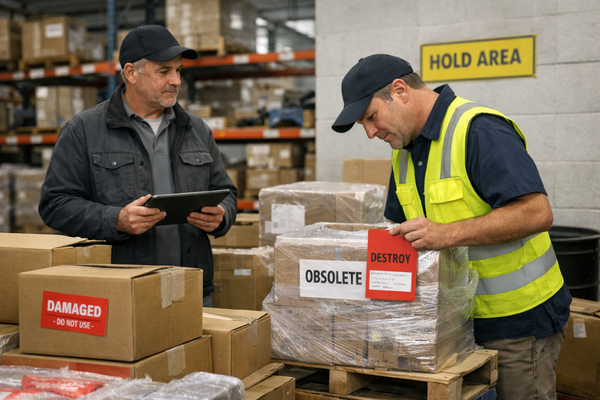
When off-spec material shows up once in a while, most facilities can manage it without much strain. When it starts showing up every week, it becomes something else. At that point, the issue is not just disposal. It is process control.
In practical terms, off-spec material is any product, package, component, or printed item that no longer meets operational, quality, brand, or compliance requirements and should not be sold, reused, or redistributed. A formal off-spec material destruction process gives a facility a consistent way to handle obsolete packaging, failed production runs, damaged inventory, prototypes, and branded materials that need controlled disposition.
Without that structure, materials often get staged wherever there is room, mixed into other loads, or removed during a rushed cleanout. That creates avoidable risk for inventory accuracy, floor space, documentation, and brand protection.
This is where many operations teams get exposed. The material is real, the risk is real, but the handling process is still informal. In Massachusetts, disposal practices can also carry legal implications when materials contain personal information. Massachusetts 201 CMR 17.00 establishes minimum standards for organizations that own or license personal information about Massachusetts residents, which is why documented destruction procedures matter when off-spec material includes sensitive data.
Why an off-spec material destruction process matters
An off-spec material destruction process is a defined workflow for identifying, isolating, transporting, destroying, and documenting materials that are no longer fit for use or safe to circulate. That can include damaged goods, obsolete product destruction, off-spec inventory disposal, mislabeled items, changeover packaging, confidential product components, and branded waste destruction.
For most facilities, the value is straightforward. A formal process reduces ambiguity. It gives teams clear rules for what belongs in the stream, who approves final disposition, how the material is stored before pickup, and what records exist after destruction. When secure material destruction is needed, that structure helps protect the business from product leakage, documentation gaps, and inconsistent handling between departments. Certified destruction services can also support audit readiness by providing records tied to a defined destruction event. For secure data destruction programs, NAID AAA Certification is often used as a verification standard in procurement and risk reviews because it reflects documented controls and audited processes.
Seven warning signs your current process is too informal
1. Obsolete packaging keeps piling up after changeovers
Packaging waste is often the first sign. A product line changes. A label gets updated. A seasonal run ends. The old cartons, printed film, inserts, or branded packaging should be removed quickly, but instead they sit in storage or get pushed to the side.
That is usually a sign that off-spec inventory disposal is being handled case by case instead of through a defined process. Packaging may seem lower risk than finished product, but it can still create brand exposure and confusion if it leaves the facility without control.
2. Damaged or failed product sits too long without a clear disposition path
Most facilities have a hold area for damaged, returned, or failed material. The problem starts when that area becomes a backlog. Product sits for weeks because no one has authority to release it, no timeline exists for review, or the next step depends on an informal conversation.
That delay affects more than housekeeping. It ties up usable space, clouds inventory visibility, and increases the chance that material gets moved, mixed, or discarded without proper tracking. A formal off-spec material destruction process creates a clear path from identification to approval to final destruction.
3. Production, warehouse, and QA are not using the same rules
This is a common operational problem. Production calls it scrap. QA calls it nonconforming material. Warehouse stages it as damaged inventory. Procurement may still view it as recoverable value. The material itself has not changed, but the handling decisions around it are inconsistent.
When departments are working from different definitions, the result is usually poor segregation, unclear ownership, and incomplete records. A formal process fixes that by establishing one set of terms, one approval path, and one documented outcome.
4. Branded waste is going into general recycling or the trash
Not every branded item requires secure destruction, but many do. Obsolete packaging, rejected promotional materials, recalled goods, prototype items, and mislabeled inventory can all create unnecessary exposure if they leave the site through general recycling or disposal.
That is why branded waste destruction and secure material destruction should be treated as control measures, not cleanup tasks. The point is not just to remove the material. The point is to make sure it is no longer usable and cannot move back into circulation in any form that creates risk.
5. You cannot produce a certificate of destruction when someone asks for it
This is often where weak processes become visible. A customer asks for documentation. A corporate team wants proof of disposal. An auditor asks how obsolete or defective materials were handled. If the answer depends on memory, an email trail, or a verbal explanation from the floor, the process is not formal enough.
Certified destruction services matter here because documentation matters. A certificate of destruction does not just confirm removal. It confirms that the material was handled through a defined endpoint.
6. Off-spec material includes confidential or regulated information
Some off-spec streams carry more than brand or inventory risk. They may include personal information, proprietary specifications, customer data, product formulas, or sensitive internal records stored in physical or electronic form. In those cases, informal disposal is not just weak practice. It may create compliance problems.
For facilities operating in Massachusetts, disposal of materials containing personal information can fall under specific data protection requirements. When that overlap exists, secure handling and documented destruction are part of the control process, not optional add-ons.
7. Material is leaving the site, but the process is still hard to audit
A vendor pickup is not the same thing as a controlled program. If there is no written scope, no material classification standard, no chain of custody, and no confirmation of final destruction, the facility is still carrying unnecessary exposure.
A more reliable approach includes clear instructions on what enters the stream, how it is prepared for pickup, who signs off, and what documentation comes back. That is the difference between removing material and managing it.
What a formal off-spec material destruction process should include
A workable process does not need to be complicated, but it does need to be consistent. In most facilities, that means five basic parts: identification, segregation, approval, destruction, and documentation.
The material should be recognized and labeled at the point where it becomes off-spec. It should then move into a designated area that is separate from saleable or reusable inventory. Someone with clear authority should approve the final disposition. The destruction step should follow a documented chain of custody. Once complete, records should match the inventory adjustment and confirm what was destroyed.
For many operations, physical setup matters as much as policy. Dedicated collection containers, locked storage points, scheduled pickups, and the right processing equipment help keep off-spec material from drifting into active production or warehouse space. When the process is visible and repeatable, it is much easier to manage.
When should disposal become destruction?
Disposal should become destruction when the business needs certainty that the material cannot be used, sold, read, recovered, or redirected in a way that creates risk.
That threshold is usually reached when the material is branded, confidential, defective, recalled, obsolete, or tied to regulated information. In some facilities, that need is driven by internal controls. In others, it comes from customer requirements, procurement standards, or recurring product changeovers that generate too much exposure to handle informally.
A practical way to get started
A good starting point is a simple review of the past month. Look at what off-spec material was generated, where it came from, how long it sat, who approved the disposition, and what documentation exists today.
That exercise usually shows the gaps quickly. Repeated obsolete packaging, mixed damaged goods, unclear ownership, and undocumented cleanouts are all signs that the facility needs a formal off-spec material destruction process.
We work with facilities across Massachusetts and Southern New England to evaluate off-spec streams, improve segregation, and build documented programs for secure material destruction, off-spec inventory disposal, branded waste destruction, and obsolete product destruction. If your current process depends too heavily on workarounds, it may be time to replace it with a system that is easier to manage and easier to defend.
For related solutions, see our Data & Product Destruction page. When you are ready to review your current handling process, contact us to discuss a documented program built for your facility.