

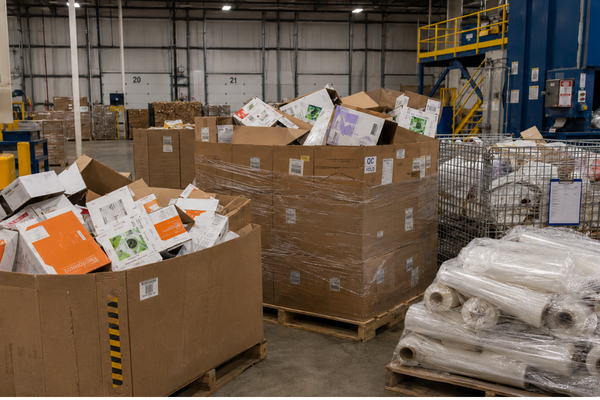
Off-spec packaging materials are a routine problem in manufacturing plants, co-packing operations, warehouses, and distribution centers. A rejected pallet of printed cartons, outdated labels, damaged corrugated boxes, obsolete film, or discontinued branded packaging can take up floor space quickly. It can also create exposure if it leaves the facility through the wrong channel.
Facilities should separate off-spec packaging by material type and exposure level, stage branded materials securely, document release approvals, and use packaging destruction services when reuse, resale, or brand misuse is possible.
The issue is not only disposal. Many rejected packaging materials still look usable. When packaging carries a logo, barcode, product claim, customer name, or retail-ready design, standard trash or open recycling may not provide enough control.
For Massachusetts facilities managing high packaging volumes, the process should protect the brand, support compliance, preserve recycling value where practical, and prevent unusable packaging from showing up somewhere it does not belong.
What Counts as Off-Spec Packaging Materials?
Off-spec packaging materials are packaging components that cannot be used for their original purpose. In commercial and industrial facilities, this often includes printed, branded, outdated, damaged, mislabeled, or nonconforming packaging.
Typical examples include corrugated boxes with incorrect graphics, folding cartons from discontinued product lines, printed sleeves, adhesive labels, rollstock, pallet wrap, shrink film, branded inserts, point-of-sale packaging, and packaging tied to old regulatory claims or expired promotional language.
Some of these materials still have value as recyclable paper, cardboard, or plastic film. That does not mean they should move through a standard recycling or trash process without review. If the packaging is branded, printed, customer-specific, or product-specific, it may need secure handling before it is recycled.
Why Standard Disposal May Not Be Enough
Standard disposal can create exposure when branded packaging remains recognizable after it leaves the building. An open dumpster, loose gaylord, roll-off, or general recycling container may work for ordinary scrap. It may not work for branded packaging disposal when materials could be removed, reused, resold, or misrepresented.
The concern is higher when the packaging looks finished even though it is unusable. A printed carton with the wrong ingredient panel, a label tied to an obsolete SKU, or a box for a discontinued consumer product may still look legitimate outside the facility. If that material enters the wrong channel, the business may face customer complaints, retailer questions, brand misuse, or avoidable compliance issues.
Massachusetts facilities also need to account for recycling rules. MassDEP lists recyclable paper, cardboard, and paperboard among materials covered by the state’s waste disposal bans. The practical answer is not simply “throw it away.” Facilities need a process that supports recycling while controlling brand exposure.
Build a Risk-Based Sorting Process for Off-Spec Packaging Materials
The first step is separating ordinary packaging scrap from controlled packaging scrap. A clean, unprinted corrugated case may be suitable for standard cardboard recycling. A printed retail carton with brand graphics, product claims, barcodes, or customer-specific information may need secure packaging recycling or packaging destruction services.
A useful sorting process should classify packaging before it leaves the production floor, warehouse aisle, or quality hold area. Low-exposure materials may include plain corrugated, unprinted cores, clean slip sheets, and non-branded stretch film. Controlled materials may include printed cartons, labels, branded film, customer-specific packaging, packaging with regulatory language, or materials tied to products that failed quality review.
The system has to be simple enough for dock teams, production leads, and warehouse supervisors to follow during a normal shift. If every pallet requires a long judgment call, the process will fail. Clear photos, marked staging areas, and written instructions help keep controlled materials out of general recycling.
Secure Staging Matters Before Destruction or Recycling
A lot can go wrong before material reaches a recycler. Off-spec packaging often sits in a quality hold area, near a baler, by a dock door, or in a trailer while teams decide what to do with it. During that gap, packaging can be misplaced, scavenged, loaded with the wrong outbound shipment, or mixed into standard waste.
Secure staging should limit access and preserve accountability. For higher-exposure branded packaging, facilities may use designated gaylords, cages, locked trailers, wrapped pallets, or clearly marked destruction areas. The goal is to keep off-spec materials from blending into usable inventory or leaving through an uncontrolled route.
Warehouse managers should also define who can release nonconforming packaging for destruction or recycling. In many facilities, that approval should involve quality, operations, procurement, or packaging management. It should not depend only on whoever is trying to clear floor space that day.
When to Use Packaging Destruction Services
Packaging destruction services make sense when packaging carries brand, resale, compliance, or misuse concerns. That does not mean every box, label, or roll of film needs the same process. It means the packaging should be made unusable, and the facility should have a reasonable record of how it was handled.
Destruction may involve baling, shredding, crushing, pulping, or another method depending on the material and exposure level. Printed corrugated may be suitable for controlled baling. Labels or small-format branded components may need more aggressive destruction because they are easy to remove and misuse. Film, sleeves, and flexible packaging may need to be consolidated separately so the material can be recycled without contaminating paper or cardboard streams.
The material type matters. Corrugated boxes, paperboard cartons, LDPE film, labels, and mixed packaging components do not all belong in the same recycling stream. Treating every packaging problem as one pile usually creates more handling work and less value.
Keep Corrugated, Film, Labels, and Cartons Separate
Mixed packaging waste is harder to recycle and harder to document. The better approach is to separate materials as close to the source as possible.
Corrugated boxes and paperboard cartons should generally be kept clean and dry. If they carry brand exposure, they should be staged for controlled handling before baling or recycling. Plastic film, including stretch wrap and shrink film, should be kept separate from paper-based packaging because it moves through a different recycling stream. Our guidance on LDPE plastic film recycling for warehouses and manufacturers explains why clean separation, contamination prevention, and baling matter for high-volume film programs.
Labels, inserts, sleeves, and small printed components often need closer control. They are easy to remove, conceal, or misuse. These materials should not be left loose in open containers if they identify a brand, product, customer, or regulated claim.
Use Baling and Equipment Controls Carefully
Baling can reduce storage space, improve pickup efficiency, and prepare materials for recycling. For businesses that generate large volumes of cardboard, paper, shrink wrap, and other recyclable waste, onsite balers and compactors can help manage material in a more space- and labor-efficient way.
For off-spec packaging materials, baling can also create a control point. Once material is properly baled, it is harder to remove or reuse in its original form. Still, baling should not replace a review of the material. If a bale contains visible branded cartons, labels, or product-specific packaging, the facility should know where the bale is going and how the material will be handled after pickup.
Facilities evaluating equipment can review our commercial recycling equipment options and cardboard baling considerations to understand how equipment choice affects space, labor, and material movement.
What Documentation Should Facilities Keep?
A strong process leaves a record. Documentation does not need to be complicated, but it should be consistent enough for operations, quality, procurement, and management to understand what happened.
Useful records may include the material type, estimated quantity, pickup date, reason for destruction or recycling, release approval, recycler information, and any certificate or confirmation provided after processing. For recurring programs, facilities may also keep photos of staged materials, bills of lading, bale counts, and internal destruction requests.
The goal is to answer basic questions without guesswork: What was removed? Why was it removed? Who approved it? Where did it go? When was it picked up? How was it processed?
Practical Example: Obsolete Packaging From a Product Change
A consumer goods manufacturer changes packaging artwork for a regional retail customer. The facility now has several pallets of printed cartons with the old design. The cartons are clean and recyclable, but they include current brand marks, UPCs, product claims, and retailer-specific graphics.
A standard disposal approach would create unnecessary exposure. The cartons could be removed from an open container, confused with usable inventory, or show up in an unauthorized resale channel. A better process would move the pallets into a controlled staging area, document the reason for obsolete packaging destruction, separate the cartons from film and other waste, and send them through a secure packaging recycling process that makes them unusable while preserving material recovery where possible.
That approach protects the brand without treating recyclable material as trash.
How Should Massachusetts Facilities Start?
Facilities should start by identifying where nonconforming packaging is generated. Production, receiving, quality hold, returns processing, repack areas, and outbound shipping often create different packaging waste streams. A single dock-side container usually does not provide enough control.
The next step is a written decision path. Plain corrugated can move to standard recycling. Clean LDPE film can move to a film recycling program. Branded or printed nonconforming packaging can move to secure staging. Labels, obsolete cartons, and high-exposure branded packaging can be routed for documented destruction.
FAQ: Off-Spec Packaging Materials
Can off-spec packaging materials be recycled?
Yes. Many off-spec packaging materials can be recycled if they are clean, sorted correctly, and accepted by the appropriate recycling market. Corrugated, paperboard, and LDPE film often have recycling options. The key question is whether branded or printed material needs secure handling before recycling.
Is branded packaging disposal different from ordinary recycling?
Yes. Branded packaging disposal needs more control when packaging could be reused, resold, counterfeited, or mistaken for authorized material. The recycling value of the material does not remove the need for brand protection.
What is secure packaging recycling?
Secure packaging recycling is a controlled process for collecting, transporting, destroying, and recycling packaging materials that carry brand, compliance, resale, or misuse concerns. The purpose is to make the packaging unusable while recovering recyclable material when practical.
When should obsolete packaging destruction be documented?
Documentation is recommended whenever packaging contains brand graphics, product claims, customer-specific information, barcodes, labels, regulated language, or other details that could create exposure if the material leaves the facility without control.
Put the Process in Place Before the Next Packaging Hold
Off-spec packaging materials should not be handled as a last-minute cleanup issue. For manufacturers, co-packers, distributors, and warehouses, the right process protects floor space, supports recycling compliance, reduces avoidable disposal problems, and limits brand exposure.
We help Massachusetts commercial and industrial facilities manage branded and nonconforming packaging with the right mix of sorting, staging, equipment, documentation, destruction, and recycling. Contact us to discuss packaging destruction services, secure packaging recycling, and a practical plan for your facility’s off-spec packaging materials.