

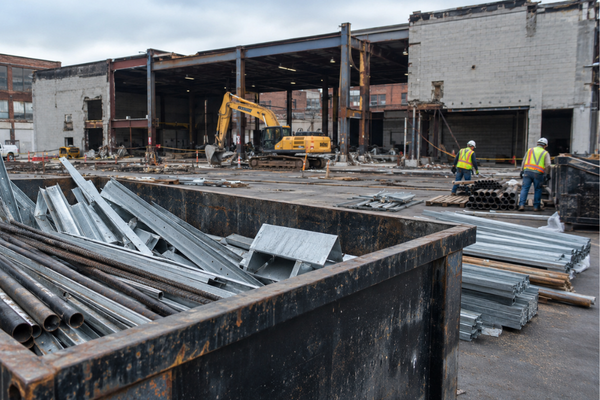
Construction and redevelopment projects produce metal in predictable places: demolition, structural changes, MEP work, tenant fit-outs, equipment removal, and final cleanouts. When that material is not planned for, it gets mixed into general debris, takes up container space, and becomes harder to document.
This C&D scrap metal recycling for developers guide gives project teams a clear process for handling recyclable metal before it becomes a jobsite problem. For developers, general contractors, and construction project managers in Massachusetts, that process affects scheduling, container placement, subcontractor coordination, waste-plan support, and project cost control.
Why C&D Scrap Metal Recycling for Developers Matters in 2026
Massachusetts construction projects operate under established waste disposal bans for several construction and demolition materials. RecyclingWorks in Massachusetts notes that the materials prohibited from disposal or transfer for disposal include ferrous and non-ferrous metal, asphalt pavement, brick and concrete, treated and untreated wood, clean gypsum wallboard, recyclable paper and cardboard, white goods, and other items commonly encountered on construction, demolition, and renovation projects.
That makes metal recycling on construction sites a planning issue, not a cleanup issue. The disposal ban does not mean every site must use the same collection method. It does mean covered materials need to be diverted from disposal, and source separation is often one practical way to support that goal.
Waiting until demolition is underway often leads to mixed loads, blocked access, rushed pickups, and lower-quality separation. For developers, a workable C&D scrap metal recycling program should answer a few questions before the project starts moving material. What metal will the job generate? Where will it be staged? Who is responsible for keeping it separate? How often should it be picked up? What documentation will the owner, municipality, or project team need?
Those answers do not need to be complicated. They do need to be established early enough for field teams to follow them.
Common Metals Generated on Construction Sites
Most construction scrap metal recycling programs begin with a basic material review. Developers and contractors do not need to identify every grade in advance, but they should understand the main categories likely to come off the site.
Ferrous metals contain iron and are usually magnetic. On construction and demolition sites, this often includes structural steel, rebar, metal studs, steel doors and frames, ductwork, railings, shelving, and general demolition scrap. Ferrous material can build up quickly during demolition, structural modification, and large interior buildouts.
Non-ferrous metals are handled differently and may have higher recovery value when kept separate. Common examples include copper pipe, copper wire, brass fittings, aluminum framing, aluminum siding, stainless steel, and HVAC-related components. Our scrap metal recycling services accept a wide range of clean ferrous and non-ferrous materials, including steel, iron, demolition scrap, copper, brass, aluminum, stainless steel, wire, cable, HVAC units, radiators, and plumbing fixtures.
Mechanical, electrical, and plumbing work often produces the most important separation decisions. Copper wire, copper pipe, brass valves, aluminum parts, and stainless fixtures should not be buried in mixed debris if the project has enough volume to justify separate handling.
Container Options for Metal Recycling on Construction Sites
Container selection should match the project phase, site access, available space, expected volume, and pickup schedule. A tight urban redevelopment site may need a different setup than a warehouse, industrial, or municipal project with more yard space.
For larger projects, roll-off containers are often the simplest jobsite recycling option. They work well when demolition or structural work will generate steady metal volume. Roll-off containers can also support construction and demolition debris, paper and metal recycling, pallets, yard waste, and other material streams, depending on the project setup.
For projects with recurring but moderate metal volume, scheduled service may be more practical than keeping a large container onsite throughout the job. Our material pickup services can support one-time or recurring pickups for recyclable materials, including metals. Pickup frequency can be set by schedule, volume, or project phase.
Many projects need a mixed approach. A redevelopment job may use a roll-off during demolition, smaller dedicated collection points during MEP work, and scheduled pickups during tenant improvements. The goal is to reduce double-handling, keep access routes clear, and make separation easy enough for crews to follow.
Scheduling Scrap Metal Pickups Around the Construction Timeline
Scrap metal does not come off a jobsite at a steady rate. It appears in waves.
During demolition, volume can spike. Structural steel, ductwork, pipe, conduit, doors, frames, fixtures, and equipment may all come out within a short window. For this phase, containers should be placed before demolition begins. Pickup frequency should be tied to the demolition schedule, not requested only after a container is already full.
During MEP rough-in and fit-out, the material stream changes. Copper wire, pipe cutoffs, aluminum, stainless steel, and brass fittings may appear in smaller quantities. These materials are easier to lose into mixed debris if the site does not have a defined staging area.
During closeout, scrap often comes from leftover material, temporary systems, racking, equipment, and final cleanouts. Scheduling a pickup before turnover helps clear the site without forcing last-minute disposal decisions.
For developers managing multiple projects, recurring pickup schedules can also create consistency. Instead of starting from scratch on each job, teams can use the same container standards, signage, and documentation process across sites. That consistency supports developer recycling programs across warehouses, industrial redevelopments, municipal projects, and large commercial construction sites.
How Scrap Metal Recycling Supports C&D Recycling MA Waste Plans
Many Massachusetts development projects require some level of waste planning. The requirement may come from an owner, municipality, sustainability program, internal construction standard, or project closeout documentation. RecyclingWorks explains that a waste management plan can help identify materials that can be diverted from disposal through deconstruction, source separation, or mixed C&D recycling.
Metal is one of the clearest candidates for source separation. It is easy for crews to identify, commonly generated, and accepted by scrap recyclers when it is clean and free of prohibited material. On larger projects, dedicated containers for materials such as metal, cardboard, wood, or gypsum wallboard can be cost-effective when the site has enough space and crews are trained properly.
A practical jobsite metal recycling plan should define:
- Material categories allowed in the metal container or staging area.
- Container locations and truck access requirements.
- Pickup triggers, such as fill level, project phase, or scheduled service day.
- Contamination rules, including no trash, wood, plastic wrap, food waste, or hazardous material.
- Documentation needs, such as weights, tickets, receipts, or certificates when required.
For developers, this structure helps comply with MA C&D recycling expectations while giving field teams a process they can actually use.
FAQ: C&D Scrap Metal Recycling for Developers
What is C&D scrap metal recycling for developers?
C&D scrap metal recycling for developers is the planned collection, separation, pickup, and recycling of metal generated during construction, demolition, renovation, and redevelopment work. It includes container planning, scheduling, material sorting, and documentation so metal is managed as a recoverable project material instead of mixed jobsite waste.
What metals should be separated on a construction site?
At minimum, projects should separate ferrous metals from non-ferrous metals when volume allows. Steel, iron, rebar, and metal studs can often be grouped together. Copper, brass, aluminum, stainless steel, wire, and cable should be kept separate when practical because these materials are graded differently.
Do all construction sites need a dedicated metal container?
No. Smaller projects may only need scheduled pickups or smaller collection containers. Larger demolition, redevelopment, warehouse, municipal, and manufacturing projects often benefit from dedicated roll-offs or clearly marked staging areas. The right choice depends on volume, site access, project phase, and the risk of metal being mixed with general debris.
How does scrap metal recycling support developer recycling programs?
Developer recycling programs work best when they are repeatable. Standard container types, signage, pickup schedules, and documentation help project managers move faster, improve subcontractor participation, and give ownership teams better visibility into waste handling.
Plan C&D Metal Recycling Before the Jobsite Gets Crowded
Scrap metal recycling works better when it is planned before containers, trades, and deliveries compete for the same space. Developers and contractors that define the process early can reduce mixed loads, improve site organization, support C&D recycling MA waste plans, and recover material that is already being generated.
We help Massachusetts developers, general contractors, and project managers set up scrap metal recycling programs with container options, pickup scheduling, material guidance, recurring jobsite service, and documentation support. Contact us to discuss C&D scrap metal recycling for developers on your next construction or redevelopment project.