

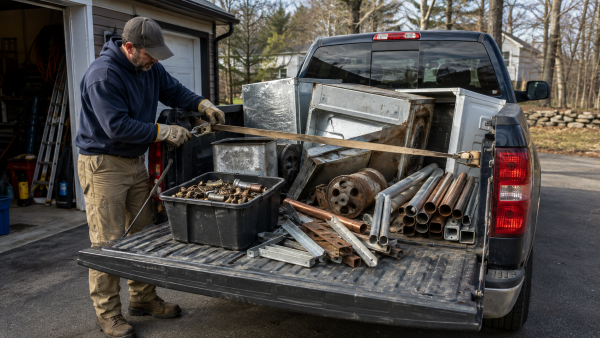
When a homeowner cleans out a garage, replaces old equipment, or finishes a small renovation project, scrap metal often becomes part of the cleanup. Small contractors face a similar challenge after repair work, demolition, and installation projects: how to organize leftover metal materials before bringing them to a recycling yard.
Knowing how to prepare scrap metal for drop off means sorting materials by type, removing unnecessary debris, safely loading the materials, and organizing the load before arriving at a recycling yard. A few basic preparation steps can reduce unloading time, improve safety, and help recycling facilities process materials more efficiently.
For homeowners and small contractors throughout Massachusetts, preparing scrap metal does not require specialized equipment. Basic tools, safe handling practices, and a simple sorting process are usually enough to make a drop-off visit smoother.
Why Preparing Scrap Metal Before Drop-Off Matters
Scrap yards receive many types of metal materials, including steel, aluminum, copper, brass, stainless steel, and mixed metal items. When materials arrive mixed with trash, plastic, or other debris, additional sorting may be needed before they can move through the recycling process.
Preparing your load before arrival helps:
- Reduce sorting time at the yard
- Improve unloading efficiency
- Make materials easier to identify
- Create a safer handling process
For occasional customers, preparation also helps determine what materials are being brought in. Different metals may have different handling, sorting, and processing requirements, so separating materials ahead of time helps avoid delays.
How to Prepare Scrap Metal for Drop Off
The best preparation starts before leaving your home, workshop, or job site. Sorting materials, removing obvious contaminants, and securing the load are the main steps to complete before transportation.
Sort Scrap Metal by Material Type
One of the most important steps when preparing scrap metal for yard drop-off is separating materials into basic categories.
Common scrap metal categories include:
- Steel and iron
- Aluminum
- Copper
- Brass
- Stainless steel
- Metal appliances and equipment
You do not need to identify every type of metal or alloy. Start by separating the materials you can easily recognize and keep similar items together.
For example, a homeowner cleaning out a garage may have old shelving, plumbing parts, tools, and appliances. Keeping those materials grouped instead of mixing everything into one pile helps speed up the drop-off process.
Small contractors can use the same approach on job sites. Separating copper piping, steel framing, aluminum materials, and other recyclable metals during a project reduces cleanup time at the end of the job.
Remove Excess Non-Metal Materials
Many scrap items contain a combination of metal and other materials. Before drop-off, remove obvious non-metal materials when possible.
Examples include:
- Plastic attachments
- Wood pieces attached to metal
- Cardboard or packaging materials
- General debris mixed into the load
Complete disassembly is not always necessary. The goal is to remove materials that do not belong in the scrap metal load and make recyclable materials easier to handle.
A homeowner recycling an old appliance, for example, may not need to completely take it apart. Removing loose trash or separating removable materials can be enough to improve the load.
For more guidance on preparing materials before recycling, read our article on how to clean and separate scrap metal for maximum value.
Use Basic Safety Practices When Handling Scrap
Scrap metal can include sharp edges, heavy components, rusted surfaces, and awkward shapes. Safe preparation helps prevent injuries during sorting and loading.
When handling scrap metal:
- Wear gloves to protect your hands
- Use eye protection when cutting or breaking materials
- Avoid lifting heavy items alone
- Secure loose pieces before transportation
- Check for sharp edges on sheet metal and appliances
Avoid forcing apart materials that are difficult to remove safely. If an item is too heavy or awkward to handle, it may be better to bring it as-is or ask the recycling yard about available options.
Small Contractor Scrap Metal Tips for Better Jobsite Cleanup
Small contractors often collect scrap metal from renovations, repairs, and construction projects. Managing those materials during the project can reduce cleanup time and keep recyclable metals out of general waste containers.
Separate Scrap During the Project
Waiting until the end of a job to sort materials usually adds extra labor. A designated scrap area or container at the job site can keep recyclable metals separate from other debris.
Examples of materials worth setting aside include:
- Copper plumbing removed during repairs
- Steel framing pieces
- Aluminum trim or siding
- Metal fixtures and hardware
This approach creates a cleaner workflow and makes the final recycling load easier to organize.
Review the Load Before Transport
Before leaving the job site, take a few minutes to check the load.
Make sure:
- Scrap is grouped by material type
- Loose pieces are secured
- Trash and non-metal materials are removed
- Large items are positioned for easier unloading
For contractors who make regular recycling trips, creating a consistent preparation process reduces time spent sorting materials before drop-off.
What Tools Are Needed to Prepare Scrap Metal?
Most homeowners and small contractors can prepare scrap metal using basic tools.
Common items include:
- Work gloves
- Safety glasses
- Pliers
- Wire cutters
- Hand tools
- Containers or bins
- Tie-down straps
The goal is not to fully process every piece of metal before arrival. The goal is to create a safer, cleaner load that can be handled efficiently at the recycling yard.
Scrap Yard Preparation Guide: Common Questions Before Drop-Off
Do I need to clean all scrap metal before bringing it in?
No. Scrap metal does not need to be completely cleaned before drop-off. However, removing excessive debris and separating obvious materials can reduce sorting time and make unloading easier.
Should different metals be separated?
Yes, when practical. Keeping aluminum, copper, brass, steel, and other materials separate helps recycling facilities identify and process the load more efficiently.
Can homeowners bring small amounts of scrap metal?
Yes. Homeowners regularly bring smaller loads from household cleanouts, repairs, and improvement projects. Preparing materials before arrival helps create a smoother drop-off experience.
Household scrap metal recycling does not need to be complicated. A basic sorting process can make occasional visits faster while helping keep recyclable materials out of disposal streams.
A Simple Checklist Before Visiting a Scrap Yard
Before loading your vehicle, check the following:
- Separate different types of metal when possible.
- Remove obvious trash and non-metal materials.
- Place small pieces in containers to prevent loose items.
- Secure larger materials for transportation.
- Use gloves and other safety equipment during preparation.
- Confirm accepted materials and current yard requirements before arrival.
A small amount of preparation can prevent delays and help ensure your materials are ready for recycling.
Prepare Your Next Scrap Metal Drop-Off
Scrap metal recycling works best when materials arrive organized and ready for handling. For homeowners and small contractors, sorting materials, removing unnecessary debris, and following basic safety practices can reduce time spent unloading and sorting.
At Miller Recycling, we work with Massachusetts customers who bring scrap metal from household projects, repairs, cleanouts, and small contracting jobs. Preparing your load before arrival helps keep the drop-off process efficient and allows materials to move through recycling more effectively.
If you have questions about preparing a load or what materials can be recycled, contact us before your next drop-off.