

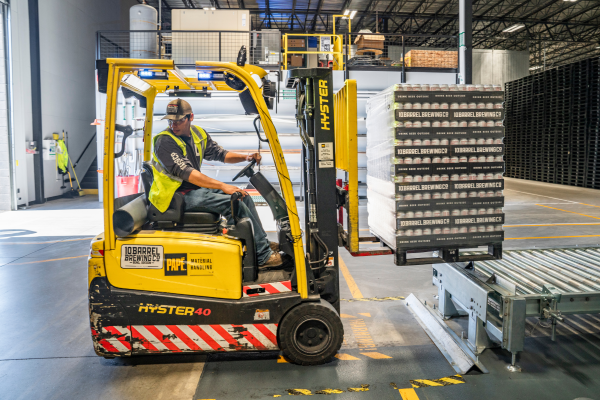
Warehouses and logistics hubs are under mounting pressure to manage plastic packaging waste more efficiently. With the sheer volume of shrink wrap, pallet film, plastic strapping, and protective packaging flowing through high-volume facilities every day, disposal isn’t just a sustainability concern—it’s a logistical and financial one. Without a clear strategy for plastic packaging recycling, this waste can clog loading areas, increase haul-away costs, and limit available storage space. Fortunately, there are proven methods that allow facilities to recover value from this waste stream while improving operational flow.
The challenge
Warehouse facilities generate huge volumes of plastic packaging waste—stretch wrap (typically LDPE), shrink film, plastic strapping, air pillows, pallet collars, and damaged packaging. Without systematic recycling and reuse programs, these materials bog down workflows, consume storage space, and lead to disposal expenses. Since only around 8–9% of U.S. plastic waste is recycled overall, with much still ending up in landfill or incineration, the burden on high-volume sites is acute.
Five Ways to Improve Plastic Packaging Recycling in Warehouses
1. Optimized Sorting & Employee Training
First, be sure to set up clear sorting stations labeled by plastic type (e.g. LDPE film, HDPE pallets). Employee training ensures proper segregation—minimizing contamination issues that reduce recyclability or revenue. Providing accessible recycling bins along with regular pickups prevents plastic waste from clogging operational zones.
2. Baling and Compaction Equipment
Installing onsite balers and compactors allows LDPE film, pallets, and strapping to be densified for transport and sale. Your recycling partner can help design the right mix of onsite equipment and offsite services for material flow in logistics environments—reducing labor burden and improving output.
3. Collaboration with Industrial Recycling Partners
Choosing the right recycling service provider is an important decision. On time pickups, reasonable prices and legal compliance are just a few things to consider when engaging a recycling company. Here are six criteria for choosing recycling services to help make the decision.
4. Reverse Logistics & Closed‑Loop Reuse
When warehouses ship returnable pallets, totes, or containers, establishing a reverse logistics system lets you reuse materials dozens of times—reducing single‑use plastic waste and supplying internal reuse loops. Closed-loop reuse systems help reduce landfill volume and keep packaging materials in circulation longer—cutting both waste and replacement costs.
5. Precycling: Upstream Waste Prevention
Precycling involves proactively selecting packaging that’s durable, reusable, or designed for easy separation—avoiding unnecessary plastic at source. This may mean switching to recyclable pallet collars, reusable containers, or smaller protective packaging where possible.
A Roadmap for Getting Started
- Conduct a waste‑stream audit: Identify volumes and types of plastic film waste generated.
- Design a tailored recycling plan: Select onsite equipment, schedule bin placements and pick‑ups, and train staff.
- Implement piloting: Deploy balers, sorting zones, and recycling partners in a target zone. Track results.
- Scale across the facility: Expand successful systems, refine logistics, and automate sorting where feasible.
- Measure and report: Track tonnage recycled, cost savings, rebates earned, and percentage of packaging diverted from landfill.
In Conclusion
Managing plastic packaging recycling in warehouses and logistics hubs is both essential and achievable. By applying smart sorting practices, adopting baling and compaction equipment, engaging recycling partners, and leveraging reuse systems, you can streamline operations, reduce waste costs, and deliver measurable sustainability impact.
To learn how our team at WM Mansfield Recycling can help implement a facility‑specific recycling system that keeps your site running smoothly while maximizing recovered materials, don’t hesitate to contact us. We’re ready when you are.