

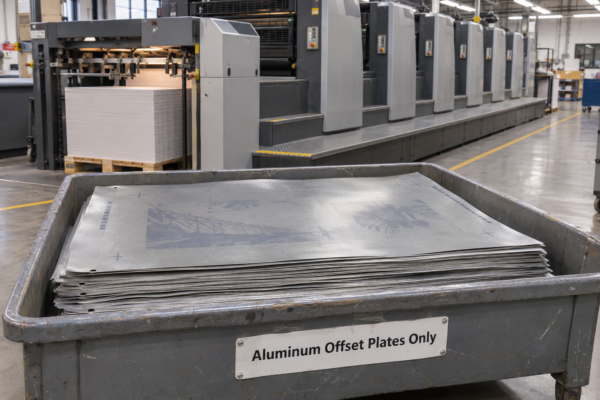
Printing facilities generate scrap metal in several parts of the plant. Prepress discards rejected plates. Press crews pull used offset plates during changeovers. Finishing and maintenance handle worn dies, steel strapping, and parts removed from equipment. Those materials can end up in the same container, even when the recycler would pay more for the aluminum on its own.
Scrap metal recycling for large printing facilities works best when each department knows which materials to keep separate and where they go before pickup. For Massachusetts commercial printers, packaging converters, and label manufacturers, the first step is to identify what comes off each line and what accumulates between maintenance jobs.
What metal waste from printing operations can be recycled?
Used aluminum lithographic plates can be sold as scrap. They should be collected separately from steel and from other forms of aluminum, such as frames and extrusions, until the recycler confirms which grades it accepts together. Photopolymer flexo plates should stay out of the aluminum plate bin. Metal-backed plates and composite sleeves need separate review because the recycler’s options depend on how they are made.
Finishing and converting departments may also generate steel dies, blades, and strapping. In maintenance, scrap can include steel guards, copper wiring, motors, and press rollers. The condition of the material matters. A rubber-covered roller may require different handling or pricing than a bare steel part. Before a cleanout, maintenance can identify which assemblies are ready to ship, and ask the recycler which ones need preparation. Our Scrapping 101 guide covers the basics of sorting scrap by metal type.
Set up printing plate recycling at the press
A dedicated container near the press gives operators a place to put used plates during a changeover. The container should fit the largest plate without leaving sharp edges exposed. A label such as “Aluminum offset plates only” gives crews a clear rule across shifts. Prepress may need a separate bin for rejected or misimaged plates. The recycler can confirm whether those plates can ship with used press plates.
Container size should account for weight as well as plate dimensions. A stack of thin plates can reach the safe weight limit before the bin looks full. A marked fill line based on that limit helps crews know when a container is ready to move. Worn blades and other sharp tooling need a separate rigid container. Paper interleaves, tape, shop towels, and steel strapping should stay out of the plate bin.
Before the first shipment, the recycler should see photos or samples of the plates in the condition they will be shipped. That is the time to confirm how the recycler handles plate coatings and residual ink and whether either affects acceptance or pricing.
Keep chemical waste out of the scrap stream
Keep spent press wash, leftover ink, plate-processing liquids, and used oil in their designated waste streams. If a plate is wet with solvent or a part is leaking oil, set it aside for your environmental, health, and safety team to evaluate before shipment. Ask the recycler to confirm acceptance after your team has determined how the material must be managed. MassDEP’s printer certification workbook explains how printers can characterize their wastes.
Massachusetts restricts disposal of ferrous and nonferrous metals under its waste disposal bans. Set up a separate collection route for covered scrap and review MassDEP’s printer certification requirements to determine what applies to your operation.
Compare scrap metal recycling for large printing facilities by net return
A commercial printing metal recycling quote should reflect what the facility generates and how the material will be loaded. A useful request lists each type of printing facility scrap metal, its estimated weight, how often it accumulates, and what loading equipment is available. Photos help the recycler distinguish routine plate scrap from items that need individual review. A recurring plate pickup and a one-time press removal should be priced separately, since removing a press may involve rigging or different transportation.
The quoted price per pound is only part of the comparison. Two recyclers may assign different grades to the same plates, account for the weight of bins or pallets differently, or charge different rates for hauling and containers. The facility should confirm how each grade will appear on the settlement statement and how the recycler handles a load that arrives with mixed material. Comparing the expected payment after those charges and deductions gives purchasing a better basis for choosing a service.
The first few shipments are a chance to see whether the grades and weights on the settlement statements match what the facility expected. If a plate load comes back graded as mixed scrap, checking the bins in prepress and at the press can help identify where the materials were combined.
Get a quote for your Massachusetts printing facility
We work with Massachusetts businesses to evaluate their scrap, determine which materials are worth keeping separate, and plan for pickup or delivery to Mansfield. If your facility has recurring plate scrap or a one-time equipment removal, contact us. Let us know what materials you have, their approximate weight, and how they are staged so we can discuss collection and transportation options.