

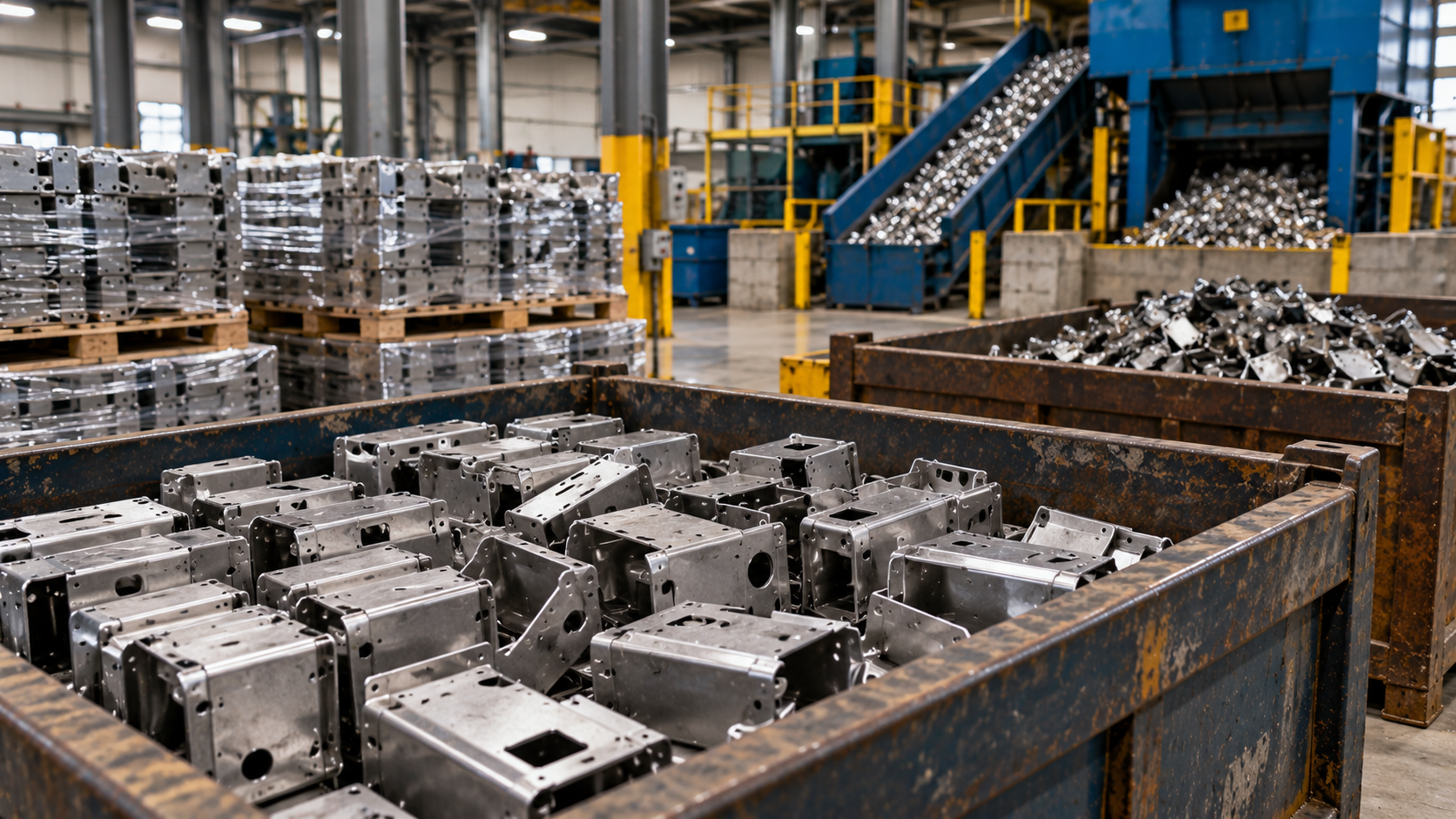
Manufacturers regularly end up with metal products that cannot be sold or shipped. A production run fails inspection. Parts are made to an outdated specification. Finished goods are damaged, recalled, obsolete, or otherwise unsuitable for their intended use.
In these cases, metal product destruction for manufacturers requires more control than putting rejected inventory into a scrap container. Operations, quality, inventory, and risk teams need to know where the material went, whether it was actually destroyed, and how the recoverable metal was handled afterward.
A defined destruction process addresses those requirements while keeping recyclable metal in the recycling stream.
Why Defective Metal Products Require Controlled Destruction
A product that fails quality control may still carry a company name, part number, proprietary design, customer specification, or other identifying feature. If it leaves the facility intact, it may be recovered, resold, reused, or put back into circulation.
That is different from routine production scrap.
Stamping skeletons, metal turnings, punchings, offcuts, and similar production materials may be suitable for a standard scrap metal recycling program. Finished or identifiable products may need to be physically destroyed before their metal is recycled.
That can include rejected fabricated components, obsolete tools or assemblies, failed prototypes, mislabeled products, branded fixtures, customer-specific parts, and finished goods that do not meet specification.
The goal is to destroy defective metal products so they cannot return to use while recovering the metal when the material and product construction allow it.
What Metal Product Destruction for Manufacturers Should Include
A metal product destruction for manufacturers program needs to account for the material from the time it is released through final processing. Physical destruction is only one step.
Before anything moves, the manufacturer should establish what is being destroyed, the approximate quantity, how the material will be identified and staged, who has authority to release it, and what documentation is required after destruction.
This becomes especially important when several departments have responsibility for the same inventory. Quality may authorize the disposition. Inventory control may release the goods. Operations may stage them for pickup. Finance, risk management, or a customer may require proof that destruction took place.
Without a defined procedure, responsibility can become unclear once the material leaves production. A written disposition process gives each department a known handoff and creates a record of what should happen next.
For facilities building that process, an off-spec material destruction checklist can help identify the decisions that should be made before material leaves the plant.
Chain-of-Custody Starts Inside the Plant
Chain-of-custody is the documented control of material as it moves from the manufacturer’s facility through pickup, transportation, receipt, destruction, and final disposition. That control starts before pickup.
Products approved for destruction should be separated from usable inventory and staged in a designated area. This reduces the risk of rejected products being returned to stock, shipped accidentally, or mixed with ordinary scrap before the required destruction occurs.
Facilities should also determine how the material will be identified. Depending on internal procedures, that might involve lot numbers, product descriptions, pallet counts, weights, work orders, or other records already used by the operation.
The removal process needs to fit the material as well. Product size, volume, weight, configuration, and loading conditions can all affect how a destruction project is handled. A few pallets of components present different logistical requirements than multiple loads of heavy fabricated products.
Most importantly, the facility should identify who has authority to release the material. A documented handoff makes it easier to account for rejected inventory from the time it leaves controlled storage until destruction is completed.
Documentation Should Be Defined Before Destruction
Documentation requirements should be established before material is processed, particularly when a destruction request comes from quality assurance, risk management, a customer requirement, or an internal control procedure.
The exact records needed will vary by project.
For one manufacturer, documentation may be needed to close a quality record. Another may need it to support an inventory adjustment. A customer may require evidence that rejected parts made to its specifications were taken out of circulation.
These requirements can affect how material needs to be identified, counted, weighed, transported, and processed. If a facility needs records tied to a particular production lot, for example, that requirement should be known before the material is consolidated with other scrap.
Manufacturers should therefore determine what constitutes acceptable proof of disposition internally and confirm what documentation will be available before approving the project. Trying to reconstruct that information after processing creates an unnecessary gap in the record.
Brand Protection Product Destruction Limits Unauthorized Reuse
When an identifiable product cannot be allowed back into use or onto a secondary market, brand protection product destruction may need to be part of the disposition process.
The concern is not limited to products that look damaged. A rejected component can appear functional to someone who does not know why it failed inspection. A prototype can reveal a design that was never intended for distribution. A cosmetic defect may violate the manufacturer’s standards while leaving the product usable enough for someone else to attempt to resell it.
Customer-specific parts create another concern. Even when they have little value as finished goods, allowing them to leave the facility intact may conflict with contractual requirements or internal controls governing customer property. That is why intact defective products should not automatically be treated as ordinary scrap.
Physical destruction changes the product so it can no longer perform its intended function. For manufacturers, secure product destruction is therefore part of inventory control and risk management as well as material disposition.
Manufacturing Scrap Metal Recycling Comes After Destruction
Products that require secure destruction can still contain recyclable material. After a product has been rendered unusable, ferrous and nonferrous metals may be suitable for recycling. Depending on the product and its construction, that can include steel, stainless steel, aluminum, copper, brass, and other metals.
For identifiable or sensitive products, destruction should occur before the material is treated simply as scrap. Manufacturing scrap metal recycling then addresses the remaining metal rather than the original finished product.
Material composition can affect that process. A component made from a single metal may be relatively straightforward to recycle after destruction. Assemblies containing multiple metals, plastics, electronics, coatings, oils, or other materials may require additional separation or handling.
Understanding the product’s composition before destruction can help determine the appropriate downstream recycling path.
Manufacturers with regular metal streams should also distinguish product destruction material from ordinary manufacturing scrap metal. Maintaining separate procedures for the two streams can reduce the chance that controlled products enter routine scrap handling prematurely.
What Should Manufacturers Ask a Product Destruction Provider?
Manufacturers evaluating a provider should review five areas: chain-of-custody, the destruction method, documentation, downstream recycling, and capacity. Those factors help determine whether the process will support the facility’s quality, inventory, risk, and operational requirements.
Ask how custody is maintained between pickup and processing. There should be a clear understanding of who controls the material at each stage and how the handoff is documented.
The destruction method should also fit the product. The relevant question is not simply whether material will be crushed, cut, shredded, or otherwise processed. The manufacturer needs to know whether the method will make the particular product unusable for its intended purpose.
Documentation should be discussed before work begins. Confirm what records will be available and whether they match the facility’s internal, customer, or quality requirements. Downstream handling matters as well. If the destroyed product contains recyclable metal, determine how that material will be processed after destruction rather than assuming that destruction and recycling are the same step.
Finally, consider capacity and repeatability. A one-time batch of obsolete inventory may require a project-specific approach. Recurring quality rejects are better handled through a process that can be repeated consistently without developing a new procedure each time.
Make Product Destruction Part of the Disposition Process
Defective and obsolete products are a normal part of manufacturing. Problems occur when there is no established route for removing them from inventory.
A defined metal product destruction for manufacturers process gives quality, operations, inventory, and risk teams a consistent way to handle those materials. Products can be isolated, documented, released by authorized personnel, transported under controlled procedures, destroyed, and directed into metal recycling where appropriate.
For manufacturers reviewing an existing process, the first step is to map what currently happens when a product is rejected. Identify who authorizes destruction, where the material is staged, what records follow it, how custody is transferred, what constitutes adequate destruction, and where the remaining metal goes afterward.
If that review identifies gaps, or if you have a specific batch of defective, obsolete, or branded metal products that needs to be handled, we can help determine the appropriate destruction, documentation, pickup, and recycling process. Contact us to discuss the material and your facility’s requirements.