

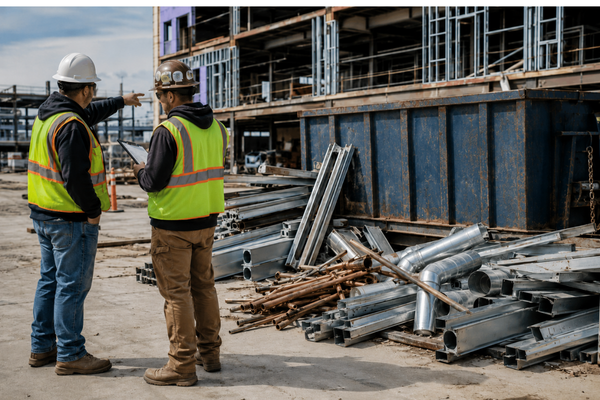
Scrap metal builds up quickly on commercial jobsites. Demolition crews pull out ductwork, railings, fixtures, and framing. Electricians generate conduit and wire. Plumbers and mechanical contractors remove pipe, valves, rooftop units, and equipment.
Without clear jobsite scrap metal recycling best practices, that material can end up in the wrong container, mixed with trash, stacked in unsafe areas, or left for someone else to handle later. That creates extra cleanup work and can reduce the value of recyclable material.
For contractors, site supervisors, and project managers, construction site metal recycling should be planned the same way dumpsters, deliveries, staging areas, and access routes are planned. On Massachusetts construction and renovation sites, where space is often tight, a simple scrap process can prevent larger problems later in the job.
Why Jobsite Scrap Metal Recycling Best Practices Matter
Jobsite scrap metal recycling best practices give crews a clear process for handling scrap before it clutters the site. The goal is straightforward: keep metal separated, accessible, safe to move, and ready for pickup or drop-off.
Commercial jobsites often generate steel studs, copper pipe, brass fixtures, aluminum framing, electrical wire, conduit, ductwork, motors, rooftop units, shelving, and mixed demolition scrap. Some material has more value when it is kept separate. Some is bulky and needs the right container. Some has sharp edges, fasteners, fluids, or attached material that must be handled carefully.
When metal is treated as general debris, the site loses control over those issues. A better system assigns locations, responsibilities, and pickup timing before scrap begins piling up.
For broader planning around construction-generated scrap, contractors can also reference our related post on C&D scrap metal recycling for Massachusetts construction projects.
Start With a Jobsite Scrap Metal Management Plan
Effective jobsite scrap metal management starts before demolition or installation begins. The site lead should identify where metal will be generated, which trades will handle it, and how the material will move from the work area to the container or staging point.
The plan should account for project phases. Demolition may produce heavy mixed metal and structural components. MEP work may produce copper, wire, conduit, and pipe cutoffs. HVAC replacement may generate ductwork, motors, radiators, compressors, aluminum, and copper components. Tenant fit-outs may add shelving, frames, fixtures, doors, and hardware.
The plan should answer the questions crews will ask on site: where does the metal go, what should be separated, what cannot go in the scrap container, who is responsible for moving material, and who calls for pickup when the container is getting full?
Use Jobsite Containers for Scrap Where Crews Can Reach Them
Jobsite containers for scrap should be easy enough to use that crews do not create their own piles. They also need to stay clear of emergency routes, truck paths, loading zones, lifts, cranes, and active work areas.
Container placement is one of the first things that determines whether contractor metal recycling works. If the container is too far from the work, scrap gets staged in corners or left near the trade area. If the container blocks access, it becomes a site problem instead of a recycling solution.
Large jobs may need more than one collection point. A multi-floor renovation, phased tenant improvement, or active manufacturing-site project may use smaller bins or carts inside the building and a larger roll-off container outside. The right jobsite containers for scrap can reduce double-handling and make it easier for each trade to follow the same process.
Separate Higher-Value Metals When It Makes Sense
Not every jobsite has enough space or labor to sort every metal by grade. Still, construction site metal recycling usually works better when obvious higher-value metals are kept out of the mixed scrap container.
Ferrous metals contain iron and are typically magnetic, such as steel and cast iron. Nonferrous metals do not contain iron in the same way and are often more valuable by weight, including copper, brass, aluminum, and stainless steel.
Copper pipe, insulated copper wire, brass valves, aluminum, stainless steel, and clean nonferrous metals should be staged separately when the site allows it. Once these materials are buried in mixed steel, they are harder to recover and harder to track.
A practical setup may include one container for mixed ferrous metal and smaller labeled bins for copper, brass, aluminum, stainless steel, and wire. This is especially useful when several subcontractors are working at the same time. Clear separation helps the field team see what each trade is generating and whether crews are following the scrap plan.
Build Safety Into the Scrap Process
Scrap metal can create real jobsite hazards when it is handled casually. Sharp edges, loose fasteners, unstable piles, long pieces of conduit, heavy components, and overloaded containers can all create risk for workers and haulers.
Safety should be part of jobsite scrap metal recycling best practices from the start. Scrap should not be staged in stairwells, corridors, equipment paths, egress routes, or near doorways used by crews. Long or sharp pieces should be placed in containers carefully, not thrown across work areas. Containers should not be filled above safe levels, and material should not stick out in a way that creates a hazard during loading or transport.
Crews also need to watch for non-metal attachments. Equipment, tanks, appliances, and mechanical components may contain fluids, refrigerants, batteries, filters, insulation, or other materials that need to be removed or handled separately. When the project team is unsure, the designated contact should confirm the requirement before the material goes into the scrap container.
Coordinate Scrap Handling Across Trades
Trade coordination is where many jobsite scrap metal management plans break down. The general contractor may arrange the container, but electricians, plumbers, HVAC contractors, demo crews, framers, and specialty subcontractors all affect what ends up in it.
Scrap procedures should be covered during subcontractor kickoff meetings and reinforced during weekly coordination meetings. Crews should know whether they are responsible for moving their own scrap, which materials must be separated, and who owns the scrap under the project agreement.
Scrap metal may have resale value, and assumptions about ownership can cause problems if they are not addressed early. A short written site rule can prevent confusion later. It also gives the site lead a clear standard to enforce when material is left in the wrong place.
Keep Trash, C&D Debris, and Metal Separate
Construction site metal recycling becomes harder when scrap is mixed with wood, drywall, insulation, packaging, food waste, liquids, or general trash. Contaminated loads take more time to handle and can reduce the value of recyclable material.
Massachusetts contractors also need to account for disposal restrictions on certain construction and demolition materials. The Massachusetts Department of Environmental Protection maintains current waste disposal bans, including materials that are banned from disposal or transfer for disposal in Massachusetts. Project teams should verify current requirements for each job and build material separation into the site logistics plan.
Clean separation depends on visible containers, clear labels, and regular oversight. If the scrap container starts becoming a catch-all, the field team should address it early. Waiting until the container is full usually means the problem has already spread across the site.
FAQ: What Are the Most Important Jobsite Scrap Metal Recycling Best Practices?
The most important jobsite scrap metal recycling best practices are to plan container placement before work begins, separate higher-value metals when practical, keep scrap out of access and egress routes, coordinate expectations with each trade, and schedule pickup before containers interfere with site operations.
For all contractors, the strongest systems are simple and visible. Crews should know where metal goes, what belongs in each container, what does not belong there, and who to contact when containers are full or conditions change.
A Practical Example: Commercial Renovation Scrap Flow
A commercial renovation may start with demolition crews removing metal framing, railings, ductwork, fixtures, shelving, and mechanical equipment. As rough-in begins, electricians and plumbers start generating wire, conduit, copper, brass, and pipe cutoffs. Later, finish crews may remove or install doors, hardware, frames, and miscellaneous metal fixtures.
A workable scrap flow would place a roll-off container near the loading area for mixed metal. Smaller secure bins would collect copper, brass, aluminum, stainless steel, and wire closer to active work zones. Each trade would be told what goes where before work starts. The project lead would check the containers during walkthroughs and call for pickup before the roll-off blocks access or becomes overloaded.
That type of system keeps contractor metal recycling tied to the job sequence. Scrap moves with the work instead of becoming a cleanup problem at the end of the phase.
Standardize Contractor Metal Recycling Across Projects
Contractors who manage multiple Massachusetts jobsites benefit from using the same basic process from project to project. Standard jobsite scrap metal management helps crews start faster, reduces repeated explanations, and gives subcontractors a familiar system to follow.
A repeatable process should include preferred container types, standard labels, sorting rules, safety expectations, pickup triggers, and recycling contact information. For recurring work, jobsite containers for scrap should be part of the standard planning conversation before mobilization. That makes it easier to match container size, placement, and pickup frequency to the actual project schedule.
We work with commercial contractors and facility teams to set up recycling programs that fit real site conditions. Our commercial recycling services can support project-specific planning, material pickup, equipment recommendations, and recycling coordination for recurring work.
Make Scrap Metal Recycling Part of the Job Plan
Jobsite scrap metal recycling best practices work best when they are simple enough for crews to follow during active construction. The process should keep scrap out of the way, reduce handling problems, protect recyclable value, and make pickups predictable.
For contractors, site supervisors, and project managers, the right time to plan scrap handling is before the jobsite is crowded and containers are already full. With the right container setup, trade coordination, and sorting process, contractor metal recycling becomes part of the work sequence.
If your team is planning a commercial construction, renovation, demolition, or tenant fit-out project in Massachusetts, contact us. We can review your expected scrap streams, recommend jobsite containers for scrap, and help set up a metal recycling process before mobilization.