

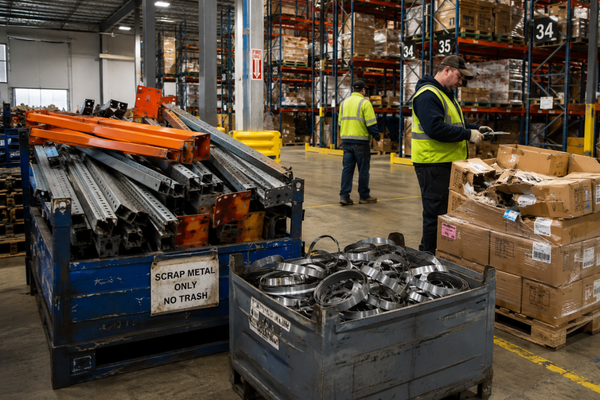
Most warehouses generate scrap metal as part of normal operations. Damaged pallet racking, bent guard rails, broken carts, steel strapping, obsolete fixtures, and unsellable product all have to go somewhere. Without a clear process, those materials often sit near dock doors, maintenance areas, trailers, or the back of the building until space becomes a problem.
A structured warehouse scrap metal recycling program helps warehouse and distribution teams manage those materials before they create housekeeping issues, safety risks, or avoidable disposal costs.
Warehouse scrap metal recycling is the process of separating, staging, and removing metal materials generated by warehouse operations, including damaged racking, steel strapping, obsolete fixtures, broken equipment, and metal-containing damaged product. For Massachusetts warehouses and distribution centers, the question is not whether scrap metal will show up. It is whether the facility has a consistent system for managing it.
Why Warehouse Scrap Metal Recycling Needs a Structured Process
Scrap metal usually appears when something in the operation changes or breaks. A rack impact, pallet collapse, equipment repair, inventory cleanout, packaging change, or layout project can all produce material that does not fit neatly into the regular waste stream.
When there is no assigned process, scrap metal may get mixed with cardboard, plastic film, wood pallets, damaged product, or general trash. That adds handling time and makes other recyclable material harder to recover.
A warehouse scrap metal recycling program gives operations managers a clear answer to basic questions. Where does damaged racking go? Who approves removal? What material should be separated? How often should pickup happen? What documentation is needed when product or inventory leaves the site?
The best programs are simple enough to hold up during a busy shift. They use assigned containers, clear staging areas, basic signage, and scheduled removal. Employees should not have to stop and decide what to do with every piece of scrap.
Common Warehouse Scrap Streams: Racking, Strapping, Fixtures, and Equipment
Most warehouses and distribution centers deal with a few recurring metal scrap streams. These materials should be identified separately because they do not always require the same handling.
Damaged pallet racking and rack components often come from forklift impacts, layout changes, re-slotting projects, and facility expansions. Uprights, beams, wire decking, braces, and protection posts take up a lot of floor space when they are left in maintenance areas or stored outside. Metal racking recycling keeps those materials from sitting around after repairs or reconfiguration work is finished.
Metal strapping recycling is a separate concern. Steel strapping is sharp, awkward, and easy to mishandle when it is mixed into general waste. If it is left loose near receiving areas, pallet breakdown stations, or dock doors, it can create cut hazards and trip hazards. A dedicated collection point keeps strapping contained and easier to remove.
Damaged carts, conveyors, shelving, bollards, and handling equipment can also become scrap over time. These items often sit because no one has confirmed whether they should be repaired, used for parts, recycled, or discarded. A warehouse metal scrap program should include a decision process for maintenance-generated scrap so it does not build up indefinitely.
Obsolete or damaged product with metal components may need a different process. Some items can be separated and recycled. Others may require secure product destruction if they are branded, defective, recalled, customer-owned, or unsuitable for resale.
How Scrap Metal Affects Safety and Housekeeping
Scrap metal is not only a recycling issue. It is also a housekeeping and safety issue.
Loose metal strapping, bent rack parts, broken shelving, and damaged guards can interfere with traffic flow and staging discipline. They can create hazards around forklifts, pallet jacks, dock plates, pedestrian walkways, and maintenance areas. Even when the material is not an immediate hazard, clutter makes it harder for supervisors to spot other problems.
A formal warehouse scrap metal recycling process can help by keeping sharp and bulky materials out of general waste areas, reducing congestion near docks and storage aisles, creating a defined place for damaged metal, and preventing scrap from contaminating cardboard, plastic film, and other recycling streams.
The goal is not to add a complicated task to the shift. The goal is to remove guesswork.
Building a Warehouse Metal Scrap Program That Works
A practical warehouse metal scrap program starts with a walk-through of the building. The review should identify where scrap is generated, where it currently piles up, and which employees are expected to move it.
In many facilities, scrap comes from receiving, returns, maintenance, inventory control, equipment repair, and project cleanouts. Each area may handle material differently unless the facility sets one standard.
After the sources are mapped, the next step is to separate the recurring streams. Damaged racking, metal strapping, loose steel, aluminum components, obsolete fixtures, and mixed metal equipment should not all be treated as one broad “junk” category. Clear categories make it easier to choose the right containers, pickup frequency, and internal handling rules.
Container placement matters. If the designated scrap area is too far from the point of generation, employees will create informal piles. If the container blocks traffic, it becomes another facility problem. The best location is close enough to use consistently but controlled enough to keep scrap out of active work zones.
The program should also define approval steps. Inventory managers may need to release obsolete fixtures or unsellable product. Maintenance teams may need to confirm that damaged equipment is no longer repairable. Operations leaders may need to approve product destruction for branded or customer-specific goods.
When Damaged Product Requires More Than Recycling
Damaged product handling can involve more than separating recoverable material. Some products cannot simply be recycled or discarded without creating brand, contractual, or compliance risk.
Examples include defective branded goods, obsolete promotional materials, customer-owned inventory, recalled items, off-spec packaged products, and items that could re-enter the market if handled informally. These materials may require secure destruction before recycling or disposal.
A sound product destruction process should define what is being destroyed, who approved it, how it will be handled, and what documentation is required after removal. Documented destruction also helps inventory, operations, and compliance teams confirm that unsellable or restricted product was handled through an approved process.
For facilities managing these streams, our data and product destruction services can support both small removals and large bulk cleanouts. We can also review whether the material should be destroyed, recycled, separated, or handled through a combined program.
How Should Warehouses Handle Metal Racking Recycling?
Metal racking recycling should begin with an internal review of damaged or obsolete rack components. Facility teams should separate usable components from scrap, remove non-metal attachments where practical, and stage the material in a safe location that does not interfere with lift truck routes, dock activity, or emergency access.
If a warehouse is replacing large sections of rack, the recycling process should be planned before the project starts. Rack removal can produce bulky metal quickly. Without containers or scheduled transportation in place, the material can block work areas and slow the rest of the job.
For scrap-ready material, the right scrap metal recycling services can help Massachusetts warehouses manage clean ferrous and non-ferrous metals, including steel, iron, aluminum, stainless steel, copper, and other recyclable metal streams.
How Should Warehouses Handle Metal Strapping Recycling?
Metal strapping recycling works best when employees have a dedicated collection point near receiving, unpacking, or pallet breakdown areas. Steel strapping should be contained. It should not be left loose on the floor or mixed into film and cardboard recycling.
This matters in facilities that also recycle LDPE stretch film. Strapping, labels, tape, and cardboard fragments can contaminate film loads and reduce the quality of otherwise recyclable material. Keeping steel strapping separate protects both the metal recycling stream and the plastic film stream.
For warehouses reviewing packaging waste more broadly, our article on LDPE plastic film recycling for warehouses and manufacturers explains how contamination control improves recycling outcomes for film-heavy operations.
What Should Be Included in a Warehouse Scrap Metal Recycling Assessment?
A warehouse scrap metal recycling assessment should review the full path of material through the facility, from the point where scrap is generated to the point where it leaves the property.
The review should cover the main sources of scrap metal, including racking, strapping, fixtures, equipment, and maintenance material. It should also look at current staging areas, housekeeping issues, safety risks, container needs, pickup frequency, transportation access, and any documentation required for product destruction or inventory closeout.
This type of assessment helps operations leaders decide whether they need a one-time cleanout, a recurring pickup schedule, onsite equipment, or a broader commercial recycling plan.
Our commercial recycling services support commercial, industrial, and municipal accounts with site visits, tailored recycling plans, equipment recommendations, and scheduled pickups. For facilities that need equipment, we can also review commercial recycling equipment options as part of a broader assessment.
Practical Example: Turning Scrap Piles Into a Managed Program
Consider a distribution center with three recurring problems: damaged rack beams from forklift impacts, loose steel strapping near receiving, and pallets of obsolete branded product waiting for inventory approval.
In an informal system, each issue sits in a different part of the building. Maintenance stores rack pieces behind the facility. Receiving throws strapping into general trash. Inventory holds damaged product until floor space gets tight. The result is repeated handling, poor visibility, and no clear record of what happened to the material.
In a managed system, damaged racking is staged in a designated scrap zone. Steel strapping is collected near the dock. Obsolete product is reviewed through a documented destruction process. Pickup is scheduled based on actual volume instead of last-minute cleanouts.
That is the operational value of warehouse scrap metal recycling. It turns scattered material into a controlled facility process.
Start With a Site-Specific Review
Every warehouse has a different layout, material mix, and labor reality. A program that works for a high-volume e-commerce distribution center may not fit a cold storage warehouse, third-party logistics operation, municipal facility, or manufacturing support warehouse.
We work with Massachusetts warehouses and distribution centers to assess scrap metal, damaged product, recyclable packaging, and hard-to-manage material streams. If your team is dealing with damaged racking, loose metal strapping, obsolete inventory, or recurring cleanout needs, request a contact us to discuss an ongoing scrap metal pickup or product destruction program.